What Is Virtual Reality Experience? A Simple Guide to Immersive Tech
 Jan, 22 2026
VR Headset Cost Calculator
Find Your Perfect VR Setup
Estimate costs for your virtual reality experience based on your needs.
No PC required. All-in-one solution.
Requires powerful PC or console. Better graphics.
Budget-friendly option. Check seller ratings.
Select your options above to see estimated costs.
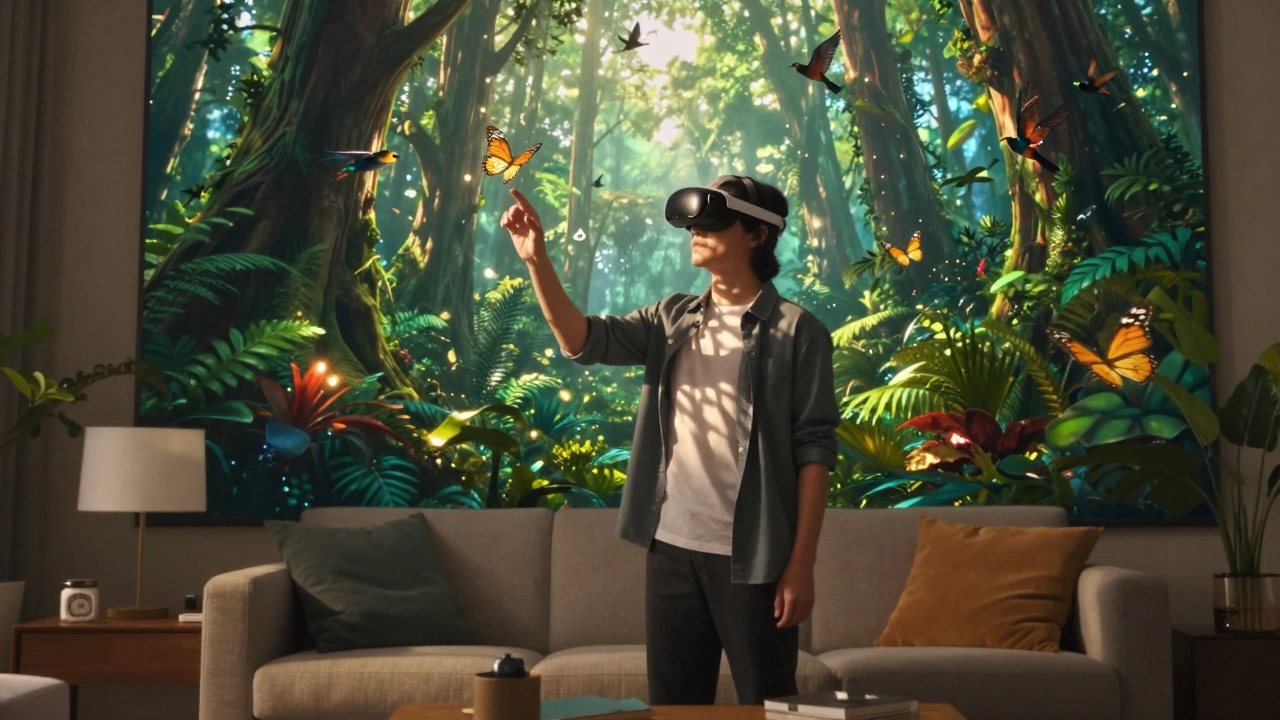
Ever put on a headset and suddenly found yourself standing on Mars, fighting dragons, or shaking hands with a dinosaur? That’s a virtual reality experience. It’s not just watching something on a screen-it’s being inside it. Your eyes see it, your ears hear it, and sometimes your body even feels it. No magic. Just sensors, software, and smart engineering working together to trick your brain into believing it’s somewhere else.
How Virtual Reality Works
At its core, virtual reality (VR) replaces your real-world view with a computer-generated one. You wear a headset-like the Meta Quest 3, PlayStation VR2, or Apple Vision Pro-that covers your eyes and displays two slightly different images, one for each eye. These images move as you turn your head, creating a 360-degree view that feels real. The trick? The system tracks your head movements in real time, updating the scene faster than your brain can notice a delay. If you look left, the virtual forest shifts left. If you tilt your head up, you see treetops. No lag. No blur. Just smooth, natural motion.
Most VR headsets also have built-in speakers or support for headphones. Spatial audio makes sounds come from specific directions. A bird chirping to your right? You’ll hear it from the right. A robot growling behind you? It sounds like it’s right there. This audio layer, combined with visuals, makes the illusion complete.
Some systems add hand controllers. You grab, throw, point, or swipe in the virtual world just like you would in real life. Advanced setups even use gloves or full-body suits with sensors that track finger movements or body posture. The more your real actions mirror what’s happening in the virtual space, the more real it feels.
What Makes It Feel Real?
It’s not just about high-resolution screens or powerful graphics. Realism comes from sensory consistency. Your brain expects certain things to happen when you move. If you step forward and the ground doesn’t respond, you feel dizzy. If you reach for a virtual cup and your hand passes through it, the spell breaks.
Modern VR systems use inside-out tracking. That means cameras on the headset map your room and figure out where you are without needing external sensors. This lets you walk around a 10x10 foot space without tripping over furniture. Some VR experiences even let you feel touch. Haptic feedback vests vibrate when you get shot. Controllers rumble when you hit something. There are even experimental gloves that use electric pulses to simulate pressure.
One study from Stanford’s Virtual Human Interaction Lab found that people who experienced a virtual forest walk for just 10 minutes reported feeling more connected to nature afterward. Their hearts even slowed down slightly. That’s not just immersion-it’s emotional impact.
Where You Can Use Virtual Reality
People think VR is all about games. It’s not. Gaming is just the most visible part. VR is already changing how we learn, work, and heal.
- Education: Medical students practice surgeries in VR without risk. History students walk through ancient Rome. Chemistry students mix virtual elements that would be dangerous in real life.
- Therapy: PTSD patients face controlled trauma triggers in safe virtual environments. People with social anxiety practice public speaking in front of virtual crowds. Phobias like fear of heights or flying are treated with gradual exposure in VR.
- Work: Architects walk through buildings before they’re built. Remote teams meet in virtual offices where they can point at 3D models and share ideas naturally. Engineers test machinery in simulated environments.
- Entertainment: Concerts in VR let you stand front row with your favorite artist-even if they’re on the other side of the world. Movie fans sit in virtual theaters with friends who are miles away.
In 2025, over 20 million people worldwide used VR regularly-not just gamers, but teachers, doctors, therapists, and designers. The tech isn’t niche anymore. It’s becoming part of daily life.

What You Need to Get Started
You don’t need a fancy setup to try VR. The simplest way is a standalone headset like the Meta Quest 3. It doesn’t need a PC or console. Just charge it, put it on, and go. Prices start around $400. You can find used models for less.
If you want higher-end visuals, you can connect a PC to a headset like the Valve Index or use a PlayStation VR2 with a PS5. These offer better graphics, more precise tracking, and more complex games-but they cost more and need extra hardware.
For beginners, free apps like YouTube VR or Meta’s Horizon Worlds give you a taste. You can watch 360-degree videos of the Great Barrier Reef or hang out in a virtual park with strangers. No commitment. No cost. Just curiosity.
Common Misconceptions
Some people think VR is just for kids or gamers. It’s not. It’s used by surgeons, soldiers, architects, and elderly people recovering from strokes. Others believe it causes motion sickness. It used to. But today’s headsets have 90Hz or 120Hz refresh rates, which reduce nausea dramatically. Most users adapt within minutes.
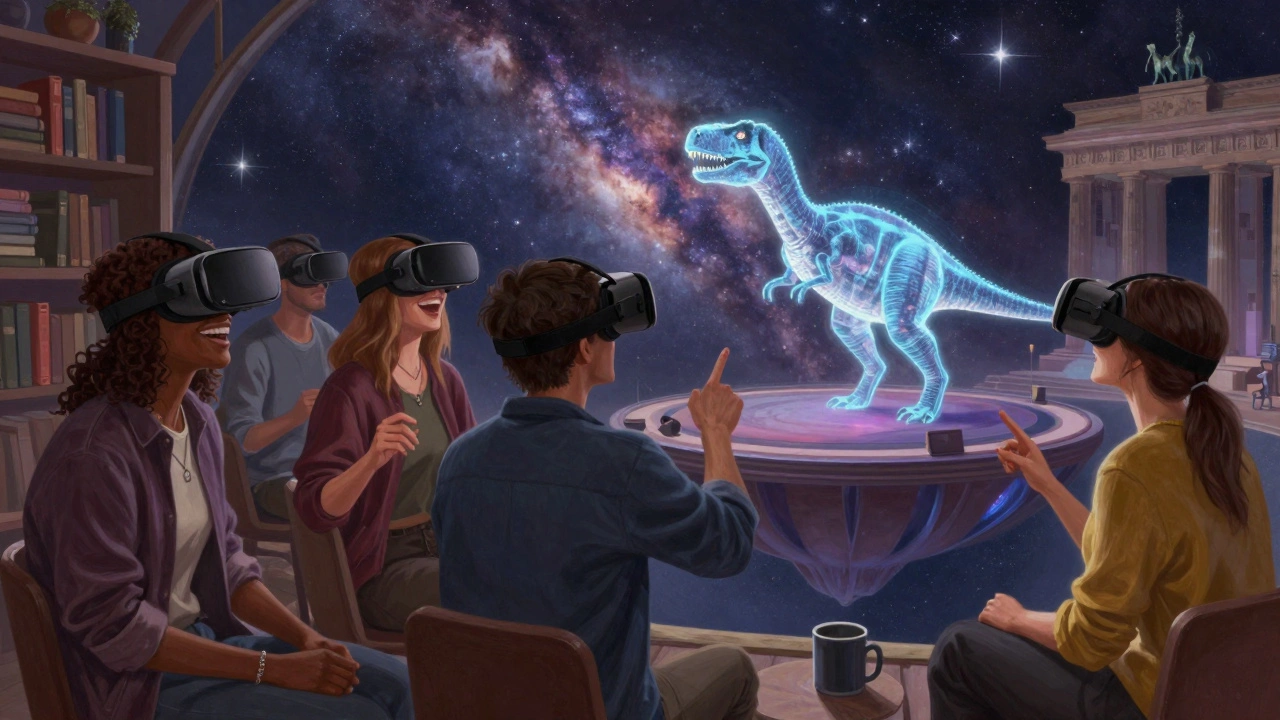
Another myth? VR isolates you. Actually, many experiences are social. You can attend a virtual classroom with students from three countries. Play poker with friends across continents. Watch a movie together in a virtual living room. The connection is real-even if the setting isn’t.
What’s Next for Virtual Reality
By 2026, VR headsets are getting lighter, cheaper, and smarter. New models use eye-tracking to render only what you’re looking at, saving power and boosting performance. Some are starting to blend virtual and real worlds-called mixed reality-where digital objects sit on your actual coffee table.
AI is making virtual characters smarter. You can now talk to a virtual therapist who remembers your past sessions. Or ask a virtual history teacher about the fall of the Roman Empire and get a detailed, natural reply.
And it’s not just tech companies pushing this. Schools in Australia, the U.S., and Germany are adding VR labs. Hospitals are using it for pain management. Even museums now offer VR tours so you can explore the Louvre without leaving your couch.
Is It Worth Trying?
If you’ve ever wondered what it’s like to be somewhere else-without leaving your room-then yes. It’s worth trying. You don’t need to buy anything right away. Many shopping centers, tech stores, and even libraries in Sydney now offer free VR demos. Try it for 10 minutes. Walk through a coral reef. Climb a virtual mountain. Talk to a robot astronaut.
It’s not about escaping reality. It’s about expanding it.
What is a virtual reality experience?
A virtual reality experience is when you wear a headset and are immersed in a computer-generated environment that feels real. You can look around, move, and sometimes interact with objects or people inside that world. Your brain believes you’re there-even though you’re still in your living room.
Do I need a powerful computer to use VR?
No, not anymore. Standalone headsets like the Meta Quest 3 work on their own. They have built-in processors and don’t need a PC or console. Higher-end systems like the Valve Index do require a powerful PC, but those are for professionals or hardcore gamers. For most people, a standalone headset is enough to start.
Can VR make you sick?
It used to, especially with older headsets and low frame rates. Today’s devices run at 90Hz or 120Hz, which means the image updates quickly enough to match your head movements. Most people don’t feel sick after a few minutes. If you do, take a break. It’s normal. Your brain just needs time to adjust.
Is VR only for gaming?
No. While games are popular, VR is used in education, therapy, architecture, medicine, and remote work. Medical students train in virtual operating rooms. People with anxiety practice public speaking in front of virtual crowds. Architects walk through buildings before they’re built. Gaming is just one part of a much bigger picture.
Can you use VR if you wear glasses?
Yes. Most headsets have enough space to fit glasses inside. Some even let you adjust the lens distance to match your prescription. There are also VR-compatible contact lenses or prescription lens inserts you can buy for certain models.
How much does a good VR headset cost?
Standalone headsets start at around $400. Higher-end models connected to PCs can cost $800-$1,200. You can find used or older models for under $200. Free apps and demos let you try it before you buy.
Is VR safe for kids?
Most manufacturers recommend VR headsets for ages 13 and up due to fit and visual development concerns. Short sessions (15-20 minutes) are fine for older kids. Always supervise use. Avoid intense or scary content. There are kid-friendly apps designed for learning and creativity that are perfectly safe.
Can I use VR without a controller?
Yes. Some experiences use only head movement-like watching a 360-degree video or exploring a virtual museum. Others use voice commands or eye-tracking. But for full interaction-grabbing, pointing, shooting-you’ll need controllers. They’re included with most headsets.
Where can I try VR before buying?
Many tech stores, shopping malls, and libraries in Sydney now offer free VR demos. Some escape rooms and arcades have VR stations. You can also check with local universities or community centers-they often host public VR events. Try it out before spending money.
What’s the difference between VR and AR?
Virtual reality (VR) replaces your real world with a completely digital one. Augmented reality (AR) adds digital objects to your real environment-like Pokémon GO or Snapchat filters. VR blocks out the physical world. AR enhances it. Mixed reality (MR) blends both, letting digital objects interact with real surfaces.
Virtual reality isn’t the future. It’s here. And it’s changing how we see, learn, and connect-with or without a headset.