5 Best Indoor and Outdoor Games for Any Group Size
 Jun, 29 2026
Game Recommendation Engine
Tell us about your situation:
Other Options Worth Considering:
Picture this: It’s a Saturday afternoon. You’ve got friends over, the kids are bored, or maybe your office is trying to break the ice at a retreat. The question isn’t just "what do we do?" but "how do we keep everyone engaged without it getting awkward fast?" Whether you’re stuck inside due to rain or soaking up the sun in a park, having a solid list of go-to games changes everything. You don’t need expensive equipment or hours of setup. You just need five reliable options that work almost anywhere.
We often think of games as either strictly for children or exclusively for competitive sports fans. That’s a mistake. The best games bridge gaps. They get people moving, thinking, or laughing together. Below, I’m breaking down five specific games-three indoor, two outdoor-that have stood the test of time. These aren’t just random picks; they are chosen because they require minimal gear, scale well with different group sizes, and actually spark conversation rather than silence.
1. Charades (The Ultimate Icebreaker)
If you want a game that requires zero budget and maximum laughter, Charades is a classic acting game where players silently act out words or phrases for their teammates to guess. It’s been around since the 19th century, and for good reason. It works in a living room, a classroom, or even a waiting area at the airport. The core mechanic is simple: one person acts, others guess. No props, no reading, no writing. Just pure, unfiltered creativity.
Why does it still work? Because it forces people out of their heads and into their bodies. In a world where we spend most of our day staring at screens, Charades demands physical expression. You might be surprised by how funny your quiet colleague looks when they try to mime "riding a mechanical bull." The barrier to entry is low, which means shy participants can jump in without fear of getting facts wrong. There’s no right or left answer, only better or worse acting.
- Best for: Large groups, mixed ages, parties, and team-building events.
- Setup time: Less than 2 minutes.
- Materials needed: A bowl for slips of paper and a timer (your phone works).
- Pro tip: Create categories that match the group. For a corporate retreat, use job-related terms. For a family reunion, use movies from the 80s or 90s.
The key to keeping Charades fresh is the word bank. If you reuse the same words every time, it gets stale. Rotate in current trends, obscure trivia, or inside jokes relevant to your specific group. This small tweak keeps the energy high and prevents the game from feeling like a school assignment.
2. Murder Mystery Dinner (Immersive Storytelling)
For those who prefer mental agility over physical comedy, a Murder Mystery Dinner is an interactive role-playing event where guests assume characters and solve a fictional crime while dining. This isn’t just a board game; it’s an experience. You buy or download a kit, assign roles, and suddenly everyone has a secret agenda. One person is the detective, another is the jealous spouse, and someone else might actually be the killer.
This game transforms a standard dinner party into a theatrical event. People come dressed up, stay in character, and interact based on clues hidden in their scripts. It solves the common problem of "what do we talk about?" because the script provides the topics. You don’t need to force conversation; the narrative drives it. Plus, it encourages teamwork. Players must share information discreetly to crack the case before the final reveal.
| Game Type | Social Interaction Level | Preparation Required | Ideal Group Size |
|---|---|---|---|
| Charades | High (Physical/Laughter) | Low | 4-20+ |
| Murder Mystery | Very High (Verbal/Roleplay) | Medium-High | 6-12 |
| Scavenger Hunt | High (Collaborative) | Medium | 2-10 teams |
The downside? It takes planning. You need to read the scripts beforehand, perhaps coordinate costumes, and set the scene with music or lighting. But if you’re hosting a birthday or a holiday gathering, the payoff is huge. Guests leave talking about the plot twists, not the weather. It creates a shared memory that lasts long after the plates are cleared.

3. Escape Room Box Sets (Portable Puzzles)
You don’t need to book a commercial venue to enjoy the thrill of solving puzzles under pressure. Escape Room Box Sets are physical puzzle kits designed to replicate the escape room experience at home or in the office. Brands like Exit the Game or The Escape Game offer boxes filled with locks, codes, maps, and cryptic notes. Your goal is to "escape" the scenario within 60 minutes.
These kits are fantastic for smaller groups, typically 2 to 5 people. They require intense collaboration. One person might be good at logic, another at spotting visual patterns, and a third at managing the timer. It highlights different strengths within a team. Unlike video games, these are tactile. You’re turning keys, mixing chemicals (safe ones), and decoding messages with real objects. This physical interaction makes the victory feel more earned.
They are also highly portable. You can take them camping, to a cabin, or just set them up on the kitchen table. Once solved, some can be reset, but many are single-use, which adds to the novelty. They’re perfect for couples or small friend groups who want a challenge that doesn’t involve shouting across a room like in Charades. It’s focused, quiet intensity followed by a massive sense of accomplishment.
4. Geocaching (The Real-World Treasure Hunt)
Now let’s step outside. If you want to combine exercise with exploration, Geocaching is a global outdoor recreational activity where participants use GPS coordinates to hide and seek containers called 'geocaches'. It turns any park, forest, or city street into a playground. You download a free app, find a nearby cache, and navigate to its location using your smartphone’s GPS.
What makes Geocaching unique is its community aspect. When you find a cache-a small waterproof container-you sign the logbook inside. Then, you move it slightly if it was disturbed, or leave a trade item if there’s space. It’s a silent conversation with strangers across the globe. You might find a note from someone in Japan or Germany who visited that same spot years ago. It connects you to the local environment in a way casual walking never does.
It’s incredibly flexible. You can do a quick 15-minute hunt on your lunch break or spend a whole weekend hiking to remote caches. It encourages observation. You learn to look at trees, benches, and rocks differently. Is that magnetic box attached to the lamppost a utility meter or a micro-cache? It gamifies the outdoors without requiring athletic prowess. Even young kids can participate, making it a great family activity that gets everyone off their phones and into nature.
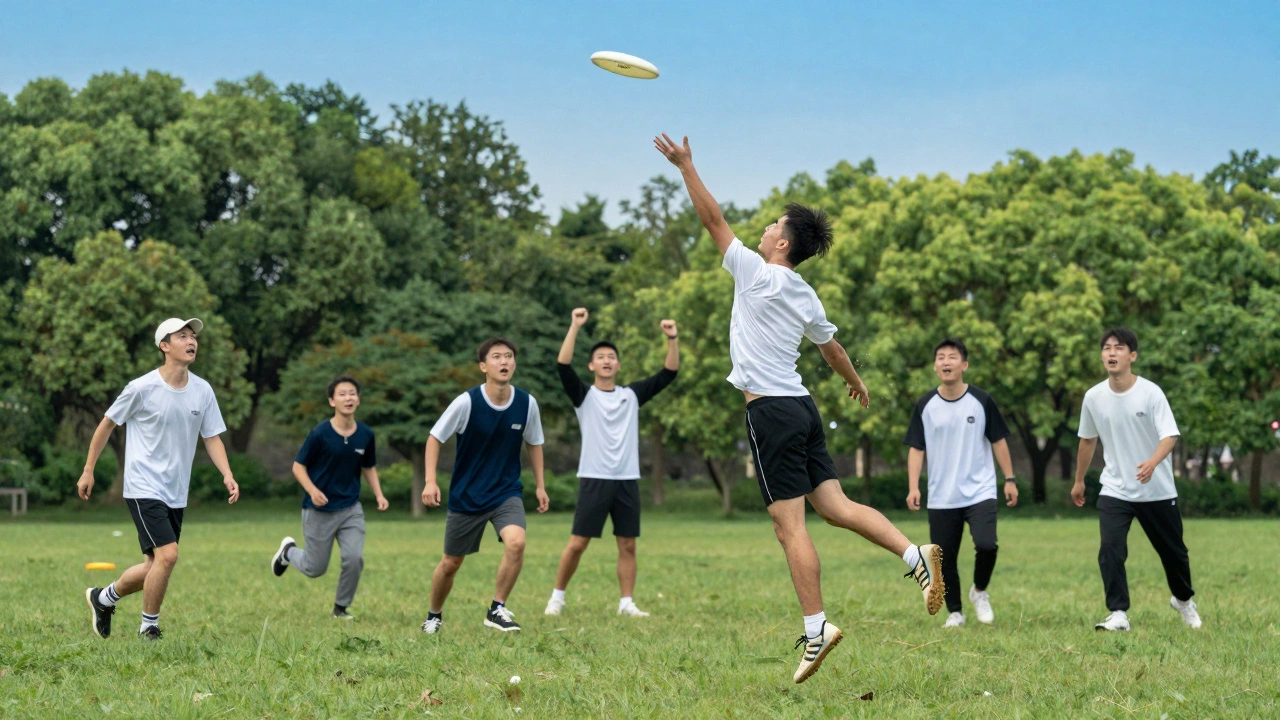
5. Ultimate Frisbee (Dynamic Team Sports)
For high-energy groups that want to burn calories, Ultimate Frisbee is a non-contact team sport played with a flying disc, emphasizing self-officiating and sportsmanship. Unlike soccer or basketball, you don’t need a referee. Players enforce the rules themselves through a concept called "Spirit of the Game." This means respect, honesty, and fair play are part of the scoring system, not just the gameplay.
All you need is a disc and some open space. A beach, a large backyard, or a public field works perfectly. The rules are easy to grasp in five minutes: throw the disc to a teammate, run to catch it, and score by catching it in the end zone. You can’t run while holding the disc, so it’s all about cutting, passing, and strategy. It’s less about brute strength and more about agility and communication.
Ultimate Frisbee is also co-ed friendly. Many leagues and casual games mix genders, which levels the playing field and fosters inclusive environments. It’s social, sweaty, and surprisingly strategic. After the game, it’s natural to grab a drink or food together. The shared physical exertion breaks down barriers faster than almost any other activity. If your group is competitive but wants to avoid the aggression of contact sports, this is your best bet.
Choosing the Right Game for Your Situation
Selecting the right game depends on three factors: energy level, group size, and available space. Don’t try to play Ultimate Frisbee in a crowded apartment complex. Don’t host a Murder Mystery for a group of introverts who hate performing. Match the game to the moment.
If you’re unsure, start with Charades. It’s the safest default. It adapts to any constraint. If you have more time and resources, invest in an Escape Room box or plan a Geocaching trip. These activities create deeper connections and memorable stories. The goal isn’t just to pass time; it’s to create moments worth remembering.
Which indoor game is best for large groups?
Charades is ideal for large groups because it scales easily. You can split people into teams, allowing 20+ participants to engage simultaneously without chaos. It requires minimal space and no prior knowledge of complex rules.
Do I need special equipment for Geocaching?
No, you only need a smartphone with GPS capability and the free Geocaching app. Some enthusiasts use dedicated handheld GPS units, but modern phones are accurate enough for 99% of caches.
Is Ultimate Frisbee safe for beginners?
Yes, it is a non-contact sport. Collisions are discouraged, and the culture emphasizes safety and respect. Beginners should focus on throwing and catching mechanics first, then gradually join pickup games.
How much does a Murder Mystery kit cost?
Prices vary widely. Digital-only kits can cost between $20-$40 USD. Physical kits with props and costumes range from $50 to $150 USD. The cost per person drops significantly as group size increases.
Can Escape Room boxes be replayed?
Most consumer Escape Room boxes are single-use because they contain breakable seals, cut papers, and irreversible puzzle steps. However, some brands offer "resettable" versions or digital companion apps for repeat play.