Are VR Headsets Safe? Health Risks, Eye Strain, and Best Practices
 Nov, 2 2026
VR Safety & Comfort Checker
Answer the questions below to evaluate your current Virtual Reality safety profile. This tool helps you identify common risks mentioned in the article, such as sensory conflict, poor fit, and environmental hazards.
Your Usage Profile
Safety Assessment
Low RiskRecommended Best Practices:
- Follow 20-20-20 Rule Every 20 mins, look 20ft away
- Hydrate Before/After Prevents headaches
- Clean Facial Interface Prevents skin issues
You just unboxed a shiny new Meta Quest 3 or perhaps you're eyeing the sleek design of the Apple Vision Pro. The promise is incredible: stepping into another world, fighting dragons, or sitting front-row at a concert. But then a nagging thought creeps in. Is staring at two tiny screens inches from your eyeballs actually safe for your brain and eyes? You are not alone in wondering this. With millions of people jumping into virtual reality experiences every day, the question isn't just about fun-it's about long-term health.
The short answer? Yes, VR headsets are generally safe for most adults when used correctly. But "generally" does mean there are specific risks you need to manage. From motion sickness to potential eye strain, understanding how these devices interact with your body is key to keeping the experience enjoyable rather than exhausting. Let’s break down what science says, where the real dangers lie, and how you can protect yourself while exploring digital worlds.
The Motion Sickness Mystery
If you have ever felt dizzy or nauseous after ten minutes in a game, you experienced simulator sickness. This happens because of a sensory conflict. Your inner ear (vestibular system) tells your brain you are standing still, but your eyes tell it you are running through a jungle. Your brain gets confused and triggers a nausea response, similar to sea sickness.
This isn't permanent damage, but it is unpleasant. Most users build up a tolerance over time, often called "VR legs." However, if you push too hard too fast, you might associate VR with feeling awful and quit entirely. To mitigate this, start with stationary games where you don't move physically. Use teleportation movement instead of smooth locomotion until your brain adapts. If you feel queasy, stop immediately. Do not try to "push through" it, as this reinforces the negative association.
Do VR Headsets Damage Your Eyes?
This is the biggest worry for parents and gamers alike. The fear is that focusing on a screen so close will cause myopia (nearsightedness) or permanent eye strain. Here is the nuance: looking at a phone screen at arm's length causes less accommodation effort than looking at a VR lens at two inches away. So, yes, your eyes work harder in VR.
However, current research suggests this strain is temporary. It resolves once you remove the headset. There is no strong evidence linking standard VR use to permanent structural eye damage in adults. That said, children under 12 are different. Their visual systems are still developing. Most manufacturers recommend limiting usage for young kids because excessive near-focus tasks could potentially contribute to myopia progression. For adults, the main issue is dry eyes. When we stare at screens, we blink less. In VR, you forget to blink even more. This leads to irritation and blurred vision that clears up after rest.
| Side Effect | Cause | Mitigation Strategy |
|---|---|---|
| Motion Sickness | Sensory mismatch between eyes and inner ear | Start slow; use teleportation; avoid artificial acceleration |
| Eye Strain | Focusing on fixed distance; reduced blinking | Follow the 20-20-20 rule; use lubricating drops |
| Headaches | Tension from tight straps; IPD misalignment | Adjust interpupillary distance (IPD); loosen headstrap |
| Physical Injury | Bumping into furniture during active play | Clear play area; use guardian boundary features |
The Importance of Proper Fit and IPD
A huge factor in comfort-and safety-is how well the headset fits your face. Every human face is unique. If the lenses are not aligned with your pupils, you force your eyes to converge incorrectly. This is known as vergence-accommodation conflict. When the images are blurry or double, your brain works overtime to fuse them, leading to rapid fatigue and headaches.
Most modern headsets like the Valve Index or Quest 3 allow you to adjust the Interpupillary Distance (IPD). Take the time to calibrate this. Do not guess. Use the built-in calibration tools. If your glasses interfere with the lenses, consider buying prescription lens inserts. Wearing bulky glasses inside a headset can scratch the lenses and cause discomfort, pushing you to wear the device improperly.
Physical Safety in the Real World
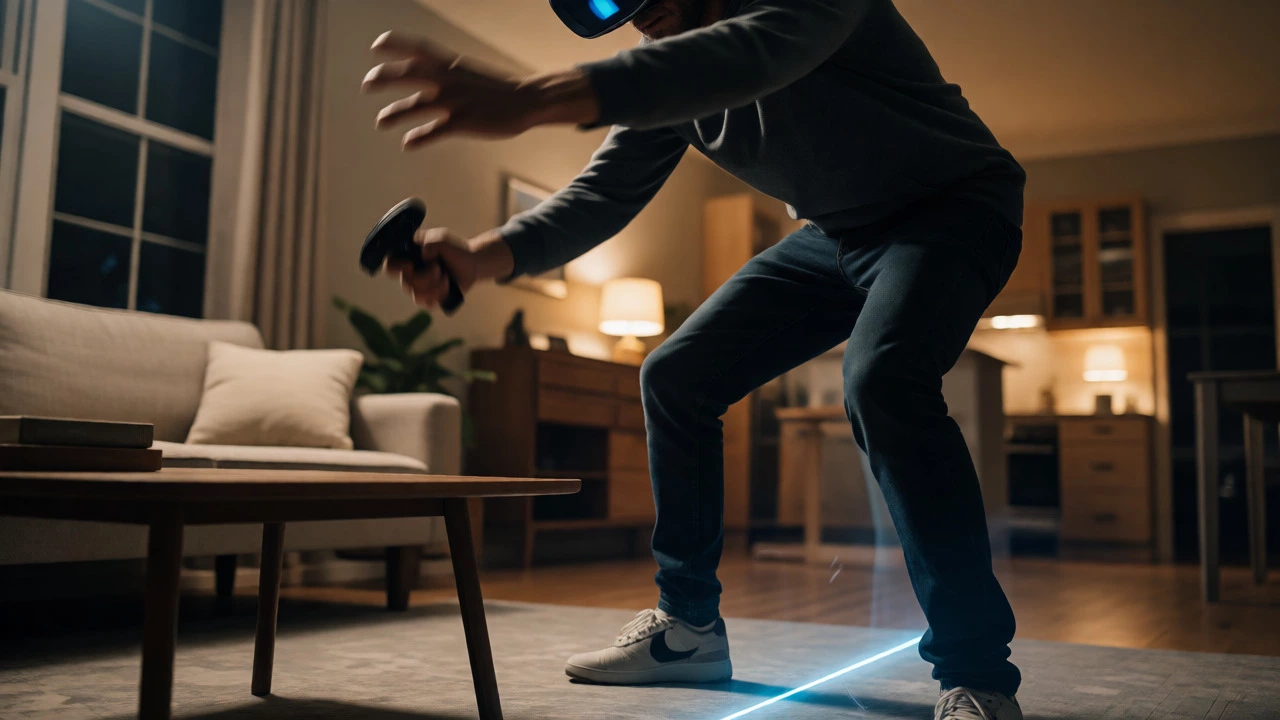
While your eyes might be fine, your shins might not be. VR isolates you from your physical surroundings. You cannot see the coffee table, the dog, or your partner walking by. This leads to collisions. Serious injuries include broken noses from hitting walls or twisted ankles from tripping over rugs.
To stay safe, always set up a Guardian Boundary. This digital fence warns you when you get close to real-world obstacles. For room-scale experiences, clear a space of at least 2x2 meters. Remove low-hanging lights, sharp corners, and pets. If you are using a tethered PCVR headset, manage the cable carefully. Tripping over a wire is one of the most common accidents in VR. Some users prefer wireless standalone units to eliminate this risk entirely.
Special Considerations for Children and Teens
Manufacturers usually set age limits around 10 to 13 years old. Why? Not because VR is toxic, but because children may not articulate discomfort well enough. A child might not say their eyes hurt until they are crying. They also lack the judgment to understand spatial boundaries, increasing injury risk.
If you let younger kids play, enforce strict time limits. Ten to fifteen minutes is plenty for a first-timer. Watch for signs of distress: rubbing eyes, tilting head, or complaining of dizziness. Also, be aware of content ratings. Just like movies, VR experiences can be intense. A horror game in VR feels far more visceral than on a TV, which can cause anxiety or sleep disturbances in sensitive children.
Long-Term Health: What We Don't Know Yet
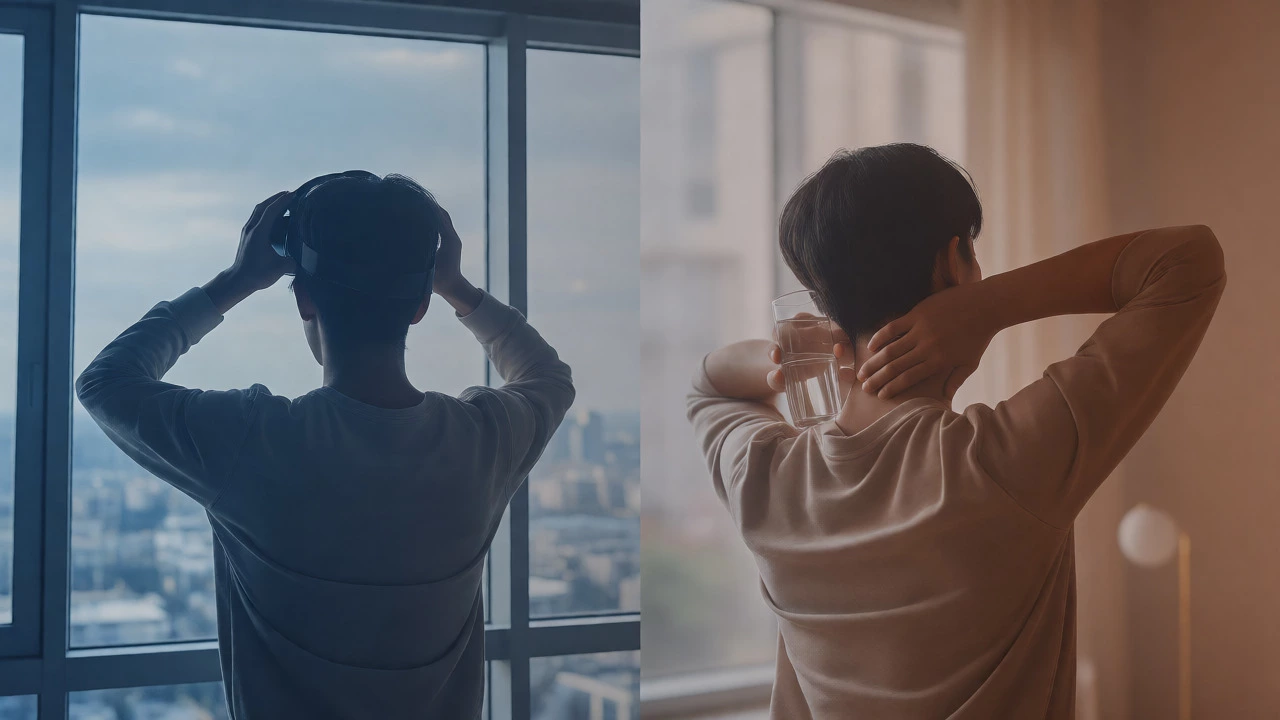
VR has been mainstream for less than a decade. We do not have multi-generational studies on its effects. While short-term safety is well-documented, long-term impacts on posture and neck strength are emerging concerns. Holding a heavy headset for hours can lead to "tech neck," causing cervical spine strain.
To counteract this, take breaks every 30 to 45 minutes. Stretch your neck and shoulders. Look out a window to relax your ciliary muscles. Treat VR like any other sedentary activity: moderation is key. If you spend eight hours a day in VR, you are likely neglecting other forms of physical movement and social interaction, which indirectly affects mental and physical health.
Best Practices for Safe VR Sessions
You don't need a medical degree to enjoy VR safely. Follow these simple rules:
- Start Small: Begin with 15-minute sessions. Gradually increase duration as your tolerance builds.
- Hydrate: Dehydration worsens motion sickness and headaches. Drink water before and after playing.
- Check Your IPD: Ensure the lenses align with your eyes every time you put the headset on.
- Use the 20-20-20 Rule: Every 20 minutes, look at something 20 feet away for 20 seconds.
- Keep It Clean: Wipe down facial interfaces regularly to prevent skin acne or bacterial buildup.
By respecting your body's signals, you can enjoy immersive technology without paying a high price in discomfort. VR is a tool, and like any tool, it requires proper handling.
Can VR cause permanent eye damage?
Current scientific consensus indicates that VR does not cause permanent eye damage in adults. Temporary eye strain and dryness are common but resolve after rest. Concerns remain for young children whose visual systems are still developing, so limited usage is recommended for those under 12.
Why do I get dizzy in VR?
Dizziness, or motion sickness, occurs due to sensory conflict. Your eyes perceive movement, but your inner ear senses stillness. This mismatch confuses the brain. Tolerance usually improves with repeated exposure, known as gaining "VR legs." Start with stationary games to reduce symptoms.
Is it safe to wear glasses in VR?
Yes, but it can be uncomfortable. Glasses may scratch the headset lenses or press against your face. Many users opt for custom prescription lens inserts that clip directly onto the VR lenses, providing better clarity and comfort without the bulk of eyeglasses.
How long should I wear a VR headset?
There is no strict limit, but experts recommend taking breaks every 30 to 45 minutes. Prolonged continuous use increases the risk of eye strain, neck pain, and dehydration. Listen to your body; if you feel fatigued, stop playing.
Can VR affect my balance?
Immediately after removing a headset, some users experience temporary disorientation or unsteadiness. This usually fades within minutes. It is advisable to sit down for a moment after a session before walking around to prevent falls.