Does Being Outside Reduce Anxiety? Science-Backed Answers
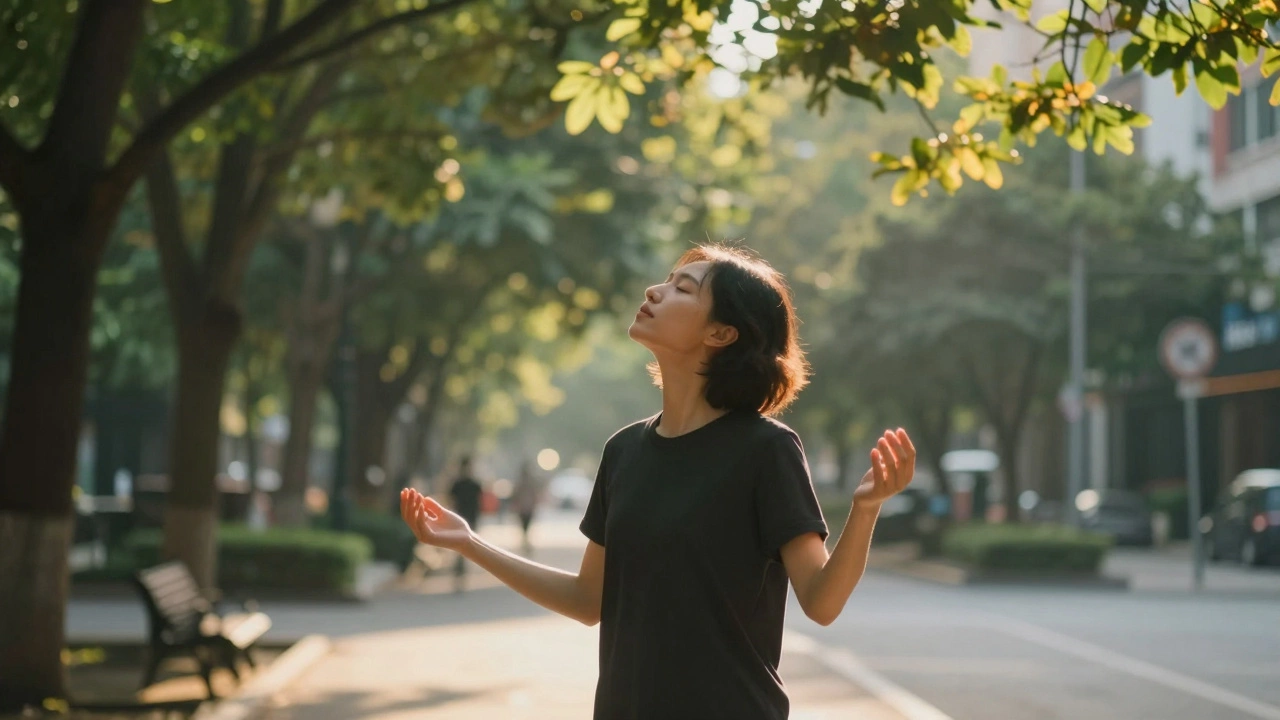 Jan, 8 2026
Nature Time Calculator
How Much Nature Time Do You Need?
Based on research from the University of Exeter, 120 minutes per week of nature exposure is linked to lower anxiety and depression. This can be broken into multiple short sessions.
Results
Personalized Suggestions
When you’re feeling overwhelmed, anxious, or stuck in your head, stepping outside might feel like a small thing. But it’s not. Thousands of people report feeling calmer after a walk in the park, a sit under a tree, or even just five minutes of sunlight on their skin. And it’s not just in their heads-it’s in their biology.
What happens to your body when you step outside?
Your nervous system doesn’t care about your to-do list. When you walk into a green space, your body starts shifting from fight-or-flight mode to rest-and-digest mode. Your heart rate slows. Your cortisol levels drop. Your breathing deepens. This isn’t magic. It’s measurable science.
A 2019 study from Stanford University tracked 120 people walking for 90 minutes-half in a natural setting, half in an urban area. Those who walked among trees and grass showed reduced activity in the part of the brain linked to rumination-the endless loop of negative thoughts that fuels anxiety. The urban walkers? No change.
It’s not just about quiet. Even busy parks with people around help. The key is greenery. Trees, bushes, grass, water. These aren’t just nice to look at-they’re signals to your brain that you’re safe. Evolutionarily, humans didn’t evolve in concrete canyons. We evolved in forests, near rivers, under open skies. Your body still remembers that.
How much time do you actually need?
You don’t need to hike for hours or move to the countryside. Research from the University of Exeter found that just 120 minutes a week spent in nature-broken into two 60-minute walks, or six 20-minute breaks-was linked to significantly lower rates of anxiety and depression. Even 20 minutes three times a week made a difference.
That’s less than you spend scrolling through your phone before bed. And it’s easier than you think. Walk to the bus stop through a tree-lined street. Eat lunch under a tree instead of at your desk. Sit on your balcony with your coffee and watch the birds. You don’t need to be "outdoorsy." You just need to be outside.
Why does sunlight matter more than you think?
Sunlight isn’t just about vitamin D. It’s a direct regulator of your circadian rhythm-the internal clock that controls sleep, mood, and stress hormones. When you get morning light, especially within an hour of waking, your brain releases serotonin, a chemical that lifts your mood and calms your nerves.
People who get natural light in the morning report better sleep, fewer panic attacks, and less daytime anxiety. A 2022 study in the Journal of Affective Disorders found that office workers with windows facing greenery had 17% lower anxiety scores than those without. Even if it’s cloudy, daylight still triggers this response. You don’t need a beach. You just need to be outside.
What about noise and movement?
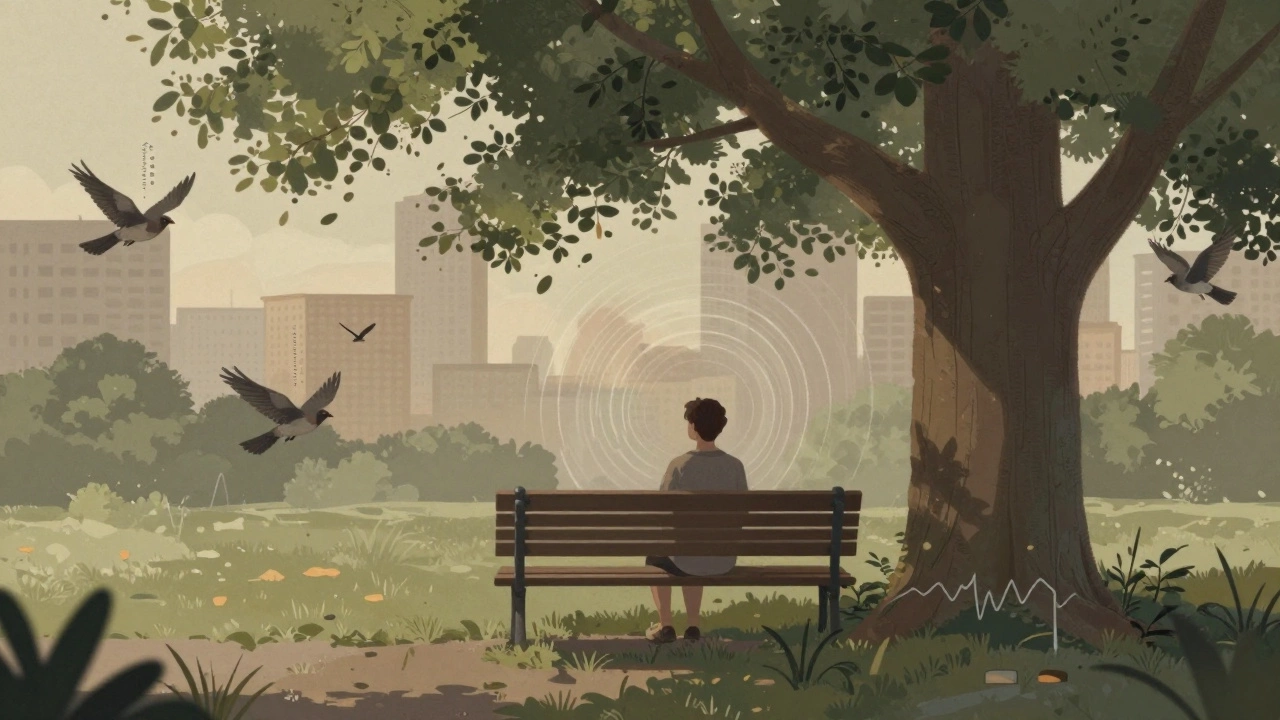
Noise pollution is a hidden anxiety trigger. Constant traffic, sirens, and loud machinery keep your nervous system on edge. But nature has a different rhythm. Birdsong, wind in leaves, water flowing-these are low-frequency, unpredictable sounds your brain interprets as non-threatening. They don’t demand attention. They let your mind relax.
Even the movement of nature helps. Watching clouds drift, leaves sway, or water ripple engages your brain in soft fascination-a state scientists call "effortless attention." It’s the opposite of the hyper-focus that comes with work stress or social media scrolling. This gentle focus gives your mental muscles a break.
Is nature better than therapy or medication?
No. But it’s a powerful partner. If you’re on medication for anxiety, being outside won’t replace it. But it can make it work better. If you’re in therapy, spending time outdoors can deepen your progress. Many therapists now recommend nature-based homework: walk without headphones. Sit and name five things you see. Breathe with the wind.
One 2023 trial in the UK gave 1,000 people with moderate anxiety a prescription for nature. They were given free park passes and guided weekly walks. After three months, 71% reported reduced anxiety symptoms. One-third reduced their medication use under their doctor’s supervision. It wasn’t a cure. But it was a game-changer.
What if you live in a city with no parks?
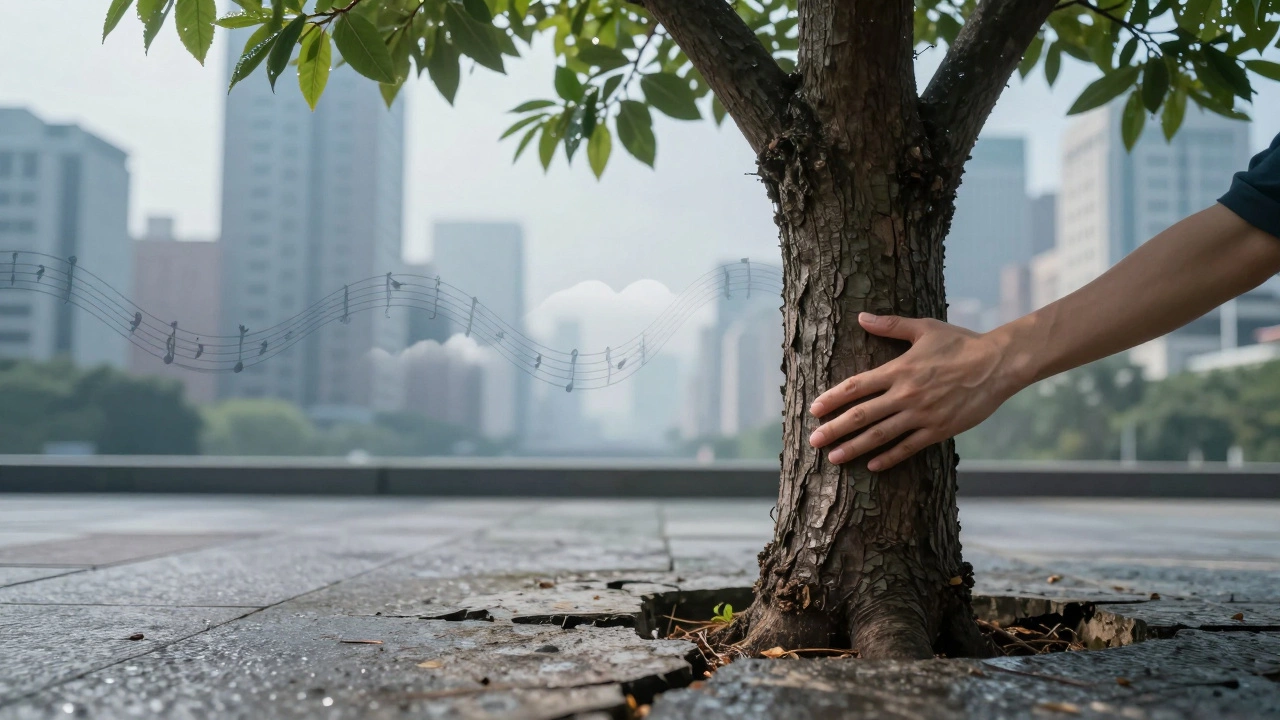
You don’t need a forest. You need green. Even a single tree on the sidewalk helps. A rooftop garden. A window box with herbs. A mural of a forest on a brick wall. Studies show that just seeing nature-even in pictures or videos-can lower stress. But real, physical contact is stronger.
If you’re in a concrete jungle, start small. Open your window and sit with it for five minutes. Step onto your fire escape. Walk around the block and notice the plants growing through cracks in the pavement. Find the quietest corner of your neighborhood. That’s your outdoor sanctuary. It doesn’t have to be perfect. It just has to be real.
Why does this work better than meditation apps?
Meditation apps are great. But they still keep you inside your head. Nature pulls you out of it. When you’re outside, your senses wake up. You feel the breeze on your skin. You smell damp earth. You hear distant laughter or a dog barking. You’re not just observing your thoughts-you’re immersed in the world.
This sensory grounding is called "earthing" or "forest bathing"-a Japanese practice called shinrin-yoku. It’s not about exercise. It’s about presence. You’re not trying to fix your anxiety. You’re letting the outside world remind you that you’re part of something bigger.
Real people, real results
Emma, 34, works in a high-pressure marketing job in Sydney. She used to panic before meetings. After her doctor suggested daily 15-minute walks along the harbor, she started doing them. No phone. No podcast. Just walking. Three months later, she says her panic attacks dropped from weekly to once every few months. "I didn’t realize how much I was holding my breath until I started breathing the sea air."
Mark, 58, retired and felt lost. He spent most days inside watching TV. He started sitting under the fig tree in his backyard every morning. Now he feeds the birds. He says, "I didn’t know I was anxious until I stopped being anxious. It was the quiet outside that taught me how to be quiet inside."
How to start today
- Step outside for two minutes right now. Just stand. Breathe. Look up.
- Next time you feel anxious, pause. Ask: "Can I go outside for five minutes?"
- Swap your indoor coffee break for an outdoor one.
- Walk to the corner store instead of ordering online.
- Keep a pair of shoes by the door so you don’t have to search for them.
You don’t need permission. You don’t need equipment. You don’t need to be healthy or fit. You just need to step out the door.
What if it’s raining or too hot?
Bad weather doesn’t cancel nature. Rain makes leaves smell stronger. Wind carries different sounds. Even in winter, the quiet of a frost-covered park is powerful. If it’s too hot, find shade. Sit under an awning. Watch the clouds. If it’s cold, wrap up. The point isn’t comfort-it’s connection.
One study in Finland found that people who walked in rain and wind reported higher levels of calm than those who stayed inside. It’s not about the weather. It’s about being present in it.
The bigger picture
Anxiety isn’t just a personal problem. It’s a signal. Our modern lives-constant screens, isolation, rushed schedules-pull us away from what our bodies need. Being outside isn’t a luxury. It’s a reset button. It’s not about escaping your life. It’s about remembering you’re part of a living world.
You don’t need to change everything. Just step outside. Again and again. The anxiety won’t vanish overnight. But it will soften. And over time, you’ll find yourself breathing deeper, thinking clearer, and feeling more at home-in your body, and in the world around you.