First 60 Seconds in an Escape Room: A Strategic Guide
 Oct, 18 2026
Escape Room Strategy Simulator
Set up your team size (optimal is 4-6 players):
Action Checklist
0/0 TasksSimulation Complete!
You've successfully navigated the first minute. Now apply these habits to the remaining 59 minutes.
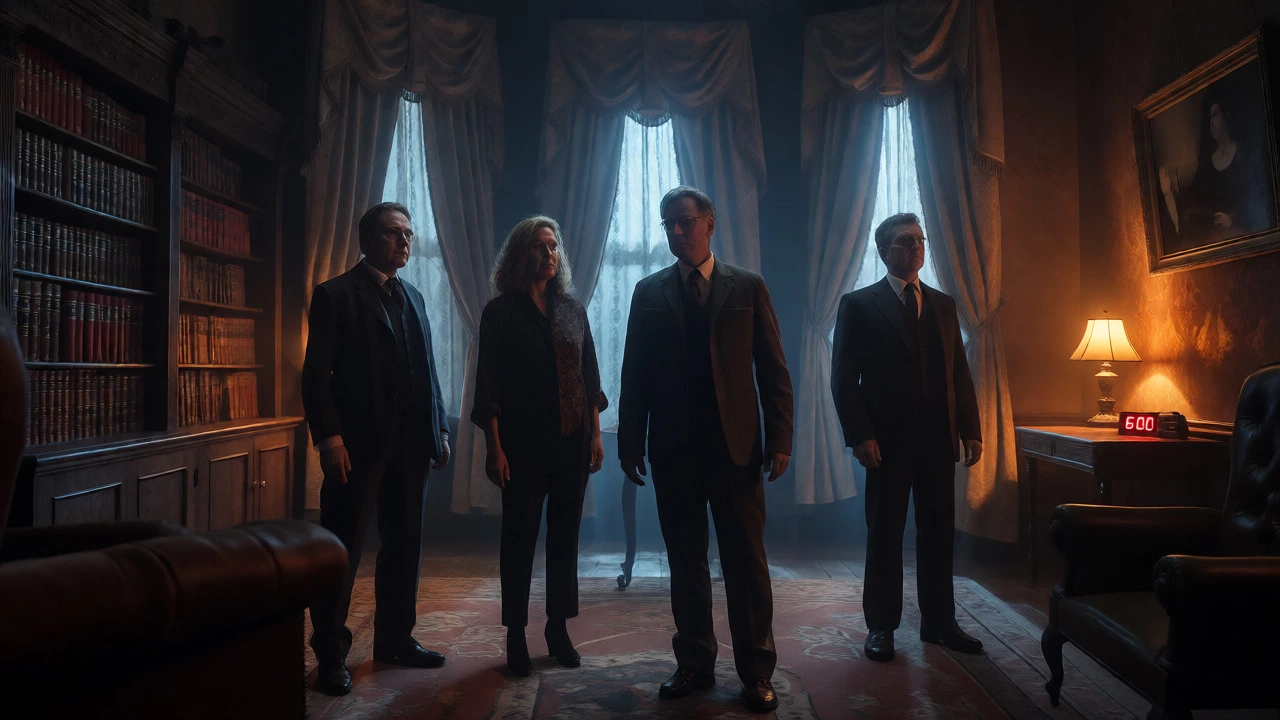
You just walked into a dimly lit Victorian study. The door clicks shut behind you. Your heart rate spikes slightly. Sixty minutes on the clock start ticking down. What do you actually do in that first minute? Most teams panic. They grab random objects, shout questions at each other, and waste precious time trying to figure out where to look. It’s a common mistake, but it’s also entirely fixable.
The difference between escaping with five minutes to spare and getting stuck in the final puzzle often comes down to how you handle those initial seconds. You don’t need to be a genius or a detective. You just need a system. Here is exactly what you should do when you first enter an escape room, broken down into actionable steps that work whether you’re in Sydney, London, or New York.
Pause and Scan the Environment
Your instinct will be to rush forward and touch everything. Resist it. For the first ten to fifteen seconds, stand still. Look around. This isn’t about being passive; it’s about gathering data before acting. If everyone starts rummaging through drawers immediately, you’ll create chaos. You might both open the same cabinet, or worse, miss a clue because someone was standing in front of it.
Scan for three specific things:
- Obvious locks: Are there padlocks on boxes? Is there a keypad on a safe? These are your end goals. Knowing them early helps you understand what kind of information you need to find (numbers, keys, symbols).
- Unusual items: In a realistic setting, everything has a purpose. A bookshelf filled with fake books is suspicious. A painting hanging crookedly is screaming for attention. Identify the outliers.
- Light sources: Can you see everything? Do you need a flashlight? Sometimes the room is dark by design, and finding the light switch or a torch is literally step one.
This brief pause allows your brain to map the space. You’re building a mental inventory. Once you have that map, you can assign tasks effectively rather than tripping over each other.
Assign Roles Based on Strengths
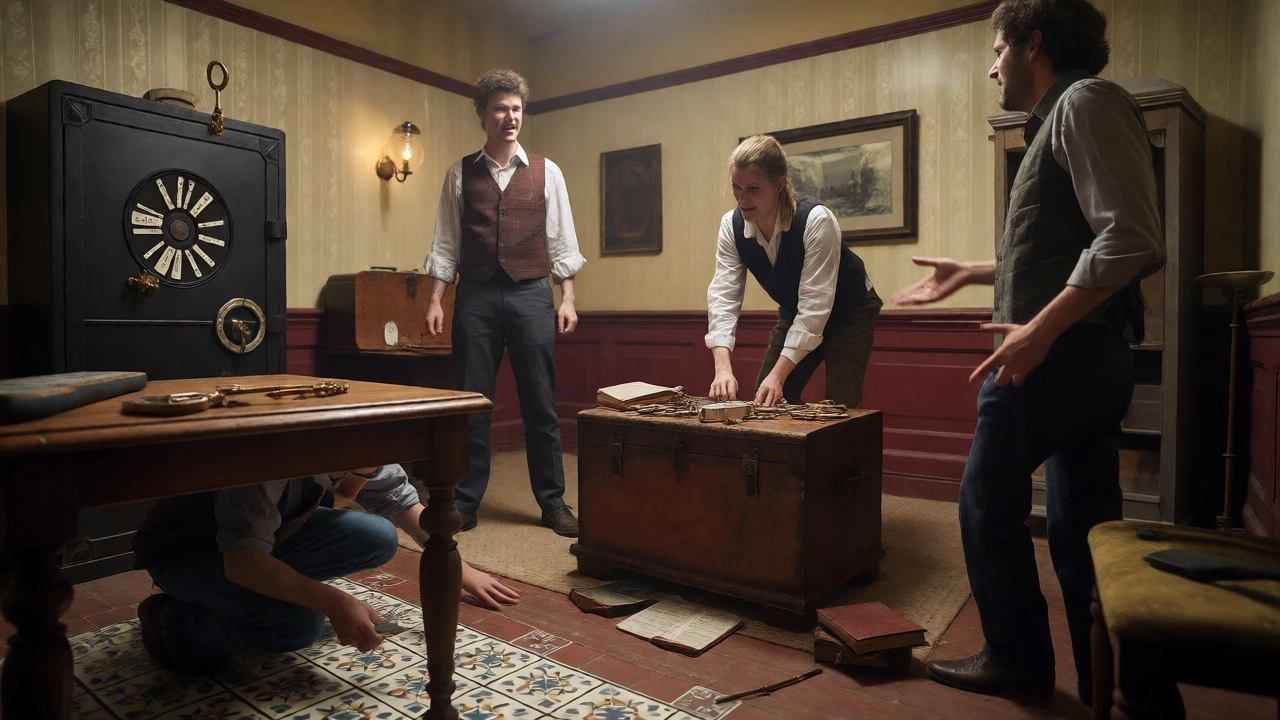
Once you’ve scanned the room, talk to your team. Don’t just say “let’s look around.” Be specific. Divide the room into zones. If there are four of you, split the physical space: left wall, right wall, floor/center table, and ceiling/high shelves. This prevents duplicate effort.
But physical division isn’t enough. Assign functional roles based on who does what best:
| Role | Primary Responsibility | Best Suited For |
|---|---|---|
| The Searcher | Finding hidden objects, reading small text, checking pockets. | Detail-oriented people, patients, observant individuals. |
| The Solver | Connecting clues, doing math, decoding ciphers. | Logical thinkers, mathematicians, pattern recognizers. |
| The Organizer | Keeping found items together, managing the flow of information. | Structured minds, project managers, clear communicators. |
| The Communicator | Ensuring everyone knows what’s happening, preventing silos. | Loud voices, extroverts, natural leaders. |
You don’t need to stick to these rigidly, but having a default structure helps. If someone finds a key, they shouldn’t just hand it to whoever is closest. They should announce it so the Organizer can decide which lock it belongs to. If someone finds a sequence of numbers, they shouldn’t try to solve the cipher alone if they hate logic puzzles. They should pass it to the Solver.
Start with the Low-Hanging Fruit
After the initial scan and role assignment, begin searching. Start with the most obvious interactions. Open doors that aren’t locked. Pick up items that look like props. Check under mats. Why? Because escape rooms are designed with a difficulty curve. The first few puzzles are usually simple to get players comfortable and warm up their brains.
Look for patterns in the environment. If you see a calendar, check the dates. If you see a row of colored lights, note the order. If you see a set of coordinates, write them down immediately. Don’t trust your memory. Even if it seems simple, writing it down frees up cognitive load for harder tasks later.
A crucial tip here: communicate findings loudly and clearly. Say, “I found a blue key,” not “Hey, look at this.” Specificity saves time. Vague announcements lead to confusion and repeated questions.
Manage Your Resources Wisely
As you collect items, you’ll quickly realize that pocket space is limited. This is where the Organizer role becomes vital. Designate a central area-a table, a box, or even a corner of the floor-where all found items go. Never put a key back in a drawer unless you are 100% sure it doesn’t fit any current lock. Too many teams lose keys because they “tidy up” too aggressively.
Also, manage your hints. Most escape rooms allow you to ask for help via a screen or walkie-talkie. Use this resource strategically. Don’t ask for a hint after two minutes of silence. But don’t wait twenty minutes while staring blankly at a wall either. A good rule of thumb: if you’ve been stuck on a single sub-task for more than five minutes without new leads, ask for a nudge. Not the answer, just a direction. This keeps momentum going without spoiling the satisfaction of solving it yourself.

Watch the Clock and Adjust Strategy
Time perception in escape rooms is distorted. When you’re engaged, thirty minutes feels like ten. When you’re frustrated, ten minutes feels like an hour. Glance at the timer every ten minutes. Ask yourself: Are we making progress? Have we solved anything significant?
If you hit the halfway mark (30 minutes) and haven’t opened a major container or solved a core puzzle, change tactics. Stop searching randomly. Gather the team for a quick huddle. Lay out all found clues. Look for connections you missed. Maybe the color of the walls corresponds to the numbers on the books. Maybe the title of the painting gives a keyword. Often, the breakthrough happens when you stop looking for new things and start analyzing what you already have.
Conversely, if you’re breezing through, slow down. Rushing leads to mistakes. Misreading a number or misinterpreting a symbol can send you down a rabbit hole for ten minutes. Double-check your solutions before entering codes into keypads. It’s faster to verify than to reset a failed attempt.
What to Avoid in the First Minute
To wrap up the initial phase, let’s highlight the traps. First, avoid tunnel vision. If one person gets obsessed with a tricky lock, the rest of the team might ignore the obvious clue across the room. Rotate focus periodically. Second, avoid hoarding information. If you find a clue, share it. Escape rooms are cooperative games, not competitive ones. Your teammate’s insight might unlock the very puzzle you’re struggling with.
Finally, don’t ignore the narrative. Many modern escape rooms have story elements woven into the decor. Reading a diary entry or listening to a recorded message might provide context that makes abstract puzzles make sense. Context is often the missing link in logical deduction.
By following this structured approach-scan, assign, search systematically, organize, and monitor-you transform chaos into control. You’ll find that the first sixty minutes aren’t just about solving puzzles; they’re about managing a project under pressure. And honestly, that skill translates pretty well to real life, too.
Do I need special skills to play an escape room?
No. Escape rooms are designed for general audiences. While some puzzles may involve basic math or wordplay, they rarely require specialized knowledge like advanced calculus or foreign language fluency. Teamwork and observation are far more valuable than academic expertise.
What happens if we get completely stuck?
You can always ask for a hint. Game masters monitor cameras and audio, so they know when you’re struggling. There is no penalty for using hints in most venues, though some purists prefer to solve everything themselves. Remember, the goal is to finish within the time limit, not to prove you never needed help.
Can we leave the room during the game?
Generally, no. Once the door closes, you are committed until the time runs out or you escape. However, if you need to use the restroom or feel claustrophobic, you can signal the game master. They will pause the clock and escort you out, but you typically cannot return to the same session once you leave.
How many people should be in an escape room team?
Most rooms are optimized for 4-6 players. Fewer than three can make it difficult to cover all areas of the room simultaneously, leading to bottlenecks. More than six can cause overcrowding and communication breakdowns, as not everyone has a clear task. Check the specific venue’s capacity limits before booking.
Are escape rooms scary?
It depends on the theme. Horror-themed rooms can be intense with jump scares and darkness. Adventure or mystery themes are usually family-friendly and non-threatening. Always read the description or call ahead if you’re sensitive to suspense or confined spaces. Venues often rate their rooms by intensity level.