How Long Should You Play VR a Day? Safe Session Limits & Tips
 Nov, 16 2026
VR Session Safety Planner
Enter your details to get personalized recommendations for how long you should play VR today and when to take breaks.
Max Continuous Session
--
minutes per block
Break Frequency
--
every X minutes
Recommended Daily Total
--
minutes total
Important Health Notes
Red Flags: Stop Immediately If You Feel:
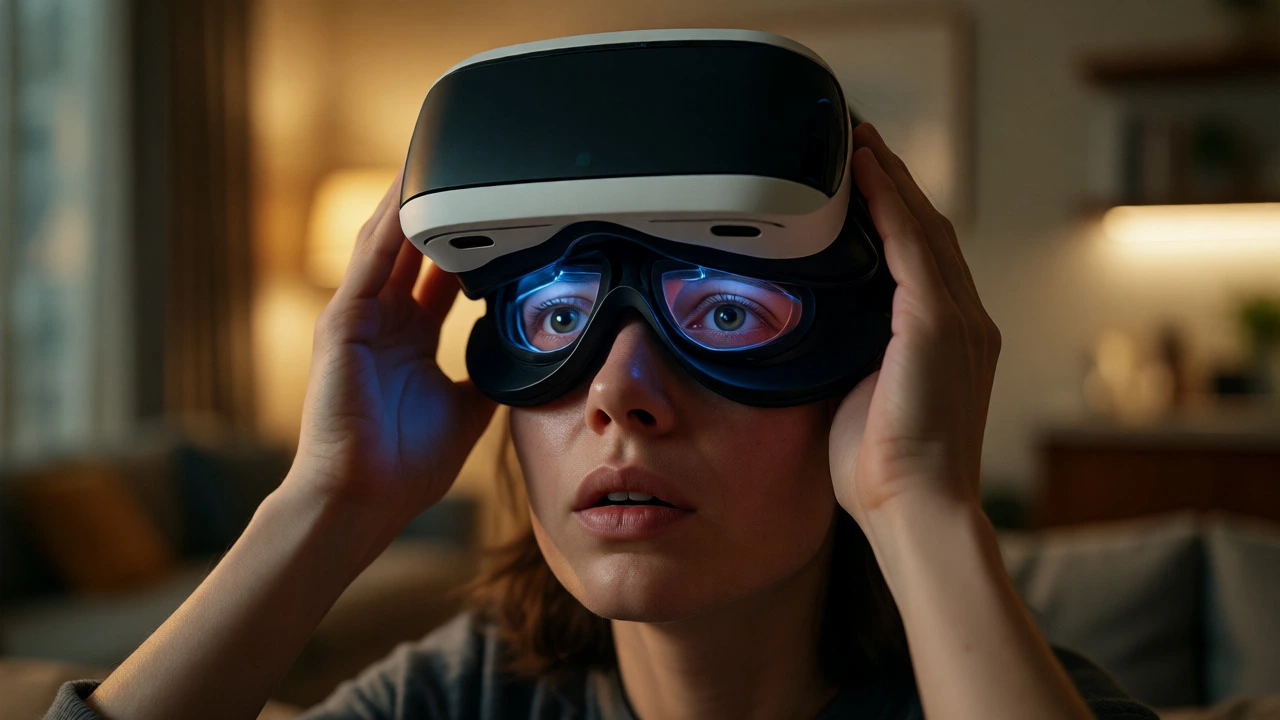
You just put on your headset. The world around you disappears, replaced by a dragon’s lair or the surface of Mars. Time stops mattering. Two hours later, you pull the headset off and realize you’ve been standing in your living room for what felt like twenty minutes. Your eyes feel gritty, your stomach does a weird flip, and you’re not sure if you should be thrilled or concerned.
This is the classic virtual reality paradox: it’s so immersive that it breaks our natural timekeeping mechanisms. But unlike watching TV, where sitting still for six hours might just make you stiff, VR engages your vestibular system (your inner ear balance center) and your visual system simultaneously. If they disagree, you get sick. So, how long is too long?
| Experience Level | Recommended Daily Limit | Session Duration | Break Frequency |
|---|---|---|---|
| Beginner (0-1 month) | 30-60 minutes | 15-20 minutes | Every 15 mins |
| Intermediate (1-6 months) | 1-2 hours | 30-45 minutes | Every 30 mins |
| Advanced (6+ months) | 2-3 hours | 45-60 minutes | Every 45 mins |
The Science Behind Your Brain’s Confusion
Your brain expects your eyes and your inner ear to agree. When you walk forward in real life, your eyes see movement, and your inner ear feels acceleration. In VR, your eyes see movement, but your body stays still. This mismatch is called sensory conflict theory. It’s the primary driver of motion sickness, often referred to as "simulator sickness."
Most people can handle this conflict for short bursts. The brain tries to resolve the discrepancy, which causes nausea, sweating, or dizziness. Push past your threshold, and your brain essentially throws an error message: "Stop doing this." For most users, this threshold sits between 20 and 45 minutes per continuous session. Once you hit that wall, no amount of willpower helps. You need to stop.
Eye strain is another silent killer. Current headsets like the Meta Quest 3 or PlayStation VR2 use fixed-focus lenses. Your eyes focus at a specific distance (usually about 2 meters away), but your brain thinks you’re looking at objects 50 meters away or right in front of your face. This disconnect, known as the vergence-accommodation conflict, tires out the ciliary muscles in your eyes faster than normal screen time. After an hour, many users report headaches behind the eyes, similar to staring at a phone in a dark room for too long.
Building Tolerance: The Gradual Approach
If you’re new to VR, don’t try to marathon Boneworks or Half-Life: Alyx on day one. Treat it like training for a marathon. Start with 10-minute sessions. Yes, ten minutes. It feels silly, but you are teaching your brain to accept the fake signals from your eyes without triggering the vomit reflex.
- Week 1: 10-15 minute sessions, twice a day. Stick to stationary games or experiences with minimal artificial locomotion (teleportation instead of smooth walking).
- Week 2: Increase to 20-minute sessions. Try games with slight movement, like Asgard’s Wrath combat arenas.
- Week 3: Push to 30 minutes. Introduce titles with more dynamic camera movements.
- Month 2: Aim for 45-60 minute blocks. Most regular users stabilize here.
Notice a pattern? We aren’t talking about total daily playtime yet; we’re talking about continuous exposure. Breaking up your time is crucial. A two-hour day broken into four 30-minute chunks is far safer and more enjoyable than one two-hour block for a beginner. Your brain needs downtime to reset its sensory integration.
Tailoring Time to Game Type
Not all VR content hits your senses the same way. A puzzle game where you stand still and point controllers is low-risk. A rollercoaster simulation or a flight sim with rapid turns is high-risk. Adjust your limits based on intensity.
Low Intensity (Relaxed)
Games like Pistol Whip (if you ignore the speed), Beat Saber (at lower difficulties), or social apps like Rec Room usually allow for longer sessions. You might comfortably play for 60-90 minutes because the visual flow matches your physical actions closely. Still, take a break every hour to hydrate and stretch your neck.
Medium Intensity (Active)
Titles like Superhot VR or Echo VR involve quick turns and dodging. These demand higher cognitive load. Limit these to 30-45 minutes. If you start feeling warm or slightly nauseous, quit immediately. Don’t push through.
High Intensity (Motion Heavy)
Flight sims (Microsoft Flight Simulator in VR), racing games, or horror titles with jump scares are brutal on the vestibular system. Cap these at 15-20 minutes initially. Even veterans rarely play these for more than 45 minutes straight without a significant break.

Physical Health: Eyes, Neck, and Hydration
VR isn’t just mental; it’s physical. Headsets weigh between 400g and 600g. That doesn’t sound like much, but holding your head up against gravity while looking around creates tension in the trapezius and neck muscles. After 45 minutes, many users develop "tech neck" or tension headaches.
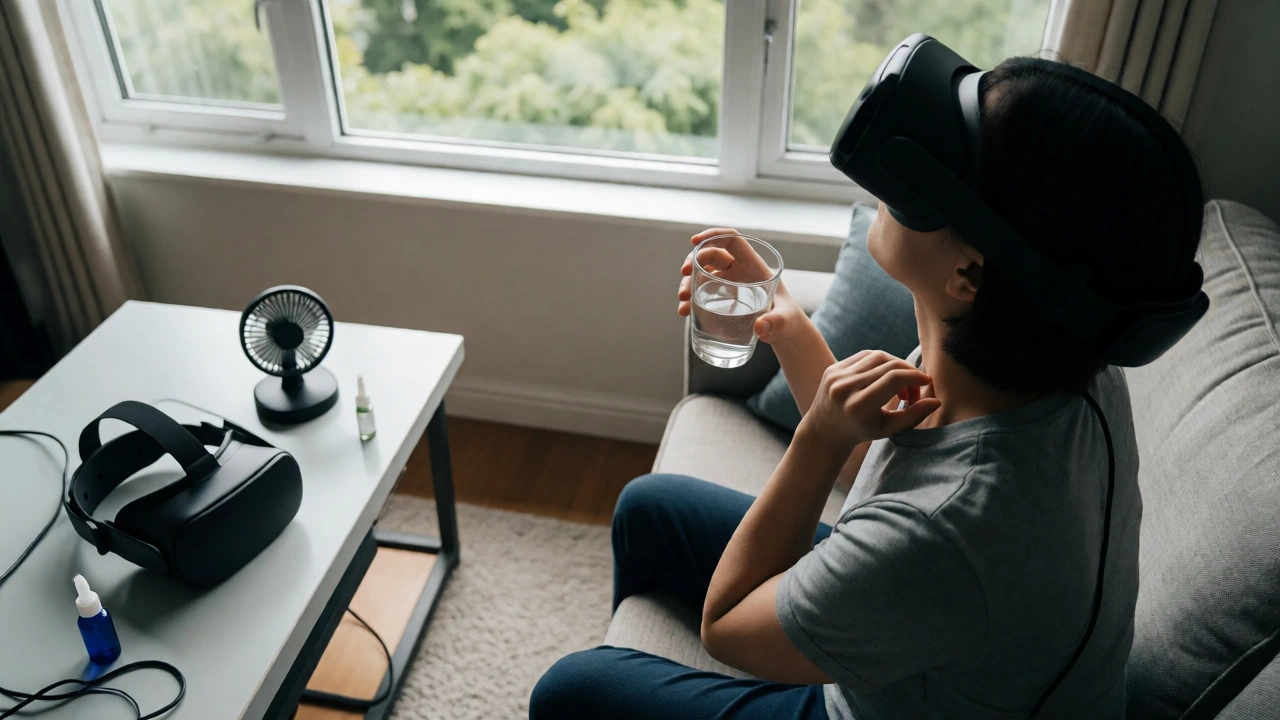
Hydration matters more than you think. Immersion makes you forget to drink water. Dehydration worsens both motion sickness and eye strain. Keep a bottle nearby. Also, blink consciously. Studies suggest people blink less frequently when wearing HMDs (Head-Mounted Displays), leading to dry eyes. Use lubricating eye drops if you wear contacts or have dry eye syndrome.
Consider the IPD (Interpupillary Distance) setting on your headset. If the lenses aren’t aligned with your pupils, you’ll force your eyes to work harder to fuse the image. This accelerates fatigue. Take five minutes before playing to adjust the lens separation until the text looks sharp and single. It’s a small step that saves you an hour of headache later.
Special Considerations for Kids and Teens
Manufacturers like Meta recommend VR for ages 10+ (Quest 3) or 12+ (older models). Why? Children’s visual systems are still developing. The constant focusing effort required by VR lenses could potentially impact myopia progression, though long-term studies are still ongoing.
For kids under 12, keep sessions under 20 minutes. Monitor them closely for signs of distress-they might not articulate nausea well, just saying they "don't want to play anymore." Ensure they sit down rather than stand, reducing fall risks and making it easier for parents to intervene. Avoid fast-paced games entirely for young children; stick to educational tours or slow-paced creative apps.
Signs You Need to Stop Immediately
Listen to your body. It knows before your mind admits there’s a problem. Watch for these red flags:
- Sweating: A sudden cold sweat is a classic pre-vomit signal.
- Stomach awareness: If you suddenly become aware of your stomach churning, stop.
- Double vision: If images blur or split, your eye muscles are fatigued.
- Headache onset: Pressure behind the eyes or temples.
- Disorientation: Feeling dizzy when you look away from the screen or remove the headset.
Do not try to "push through" these symptoms. Doing so conditions your brain to associate VR with discomfort, making future sessions harder. Instead, remove the headset, sit down, close your eyes, and drink water. Wait until symptoms fully vanish before resuming, even if that means waiting an hour.
Optimizing Your Environment for Longer Sessions
You can extend your comfortable playtime by tweaking your setup. Poor lighting increases eye strain. Ensure your room has soft, ambient light-avoid direct sunlight hitting the headset lenses, which can cause glare and wash out the image.
Ventilation is critical. Headsets trap heat. A sweaty forehead distracts you and can fog up lenses. Point a small fan toward your face or use silicone face covers that wick moisture better than foam. Some users attach a USB-powered cooling fan to their headset straps. It sounds gimmicky, but staying cool significantly extends comfort duration.
Finally, manage expectations. VR is currently a medium for intense, focused experiences, not passive consumption like Netflix. Treat it as a workout for your senses. Quality over quantity wins every time. A crisp, pain-free 30-minute session leaves you wanting more, which keeps you coming back. A painful two-hour slog might make you abandon the headset for weeks.
Can I play VR for 8 hours a day?
Technically yes, but practically no. While some enthusiasts and professionals do, it requires strict discipline. You would need to break the day into eight separate one-hour sessions with significant breaks in between. Continuous 8-hour play is rare and usually leads to severe eye strain and vestibular fatigue unless you have built up extreme tolerance over years.
Does VR damage your eyes permanently?
Current research suggests VR does not cause permanent structural damage to adult eyes. However, it can exacerbate existing conditions like dry eye or binocular vision dysfunction. Temporary symptoms like blurred vision or headaches are common after excessive use but typically resolve with rest. Long-term effects on children's developing eyes are still being studied, so moderation is key for younger users.
Why do I get tired so quickly in VR?
VR demands high cognitive and physical engagement. Your brain processes complex spatial data, your eyes focus intensely, and your body may move subtly to maintain balance. This multi-system load burns energy rapidly. Additionally, the isolation removes environmental cues that help regulate alertness, leading to quicker perceived fatigue compared to watching TV.
Is it safe to play VR before bed?
It depends on the game. High-intensity games increase heart rate and adrenaline, which can disrupt sleep. Calm experiences like nature walks or puzzles are generally fine. However, blue light exposure from screens can suppress melatonin. If you play VR at night, consider using blue-light filtering settings or keeping sessions short and relaxing to avoid insomnia.
How do I fix eye strain after VR?
Follow the 20-20-20 rule: Every 20 minutes, look at something 20 feet away for 20 seconds. After a session, look out a window at distant objects to relax the ciliary muscles. Apply a warm compress to your eyelids to stimulate oil glands and reduce dryness. Artificial tears can also help rehydrate the surface of the eye.