Is Cooking a Skill or Talent? The Truth About Becoming a Better Cook
 Aug, 3 2026
Cooking Skill Level Estimator
Assess Your Kitchen Habits
Your Potential Score
Answer the questions to see where you stand on the path from novice to pro.
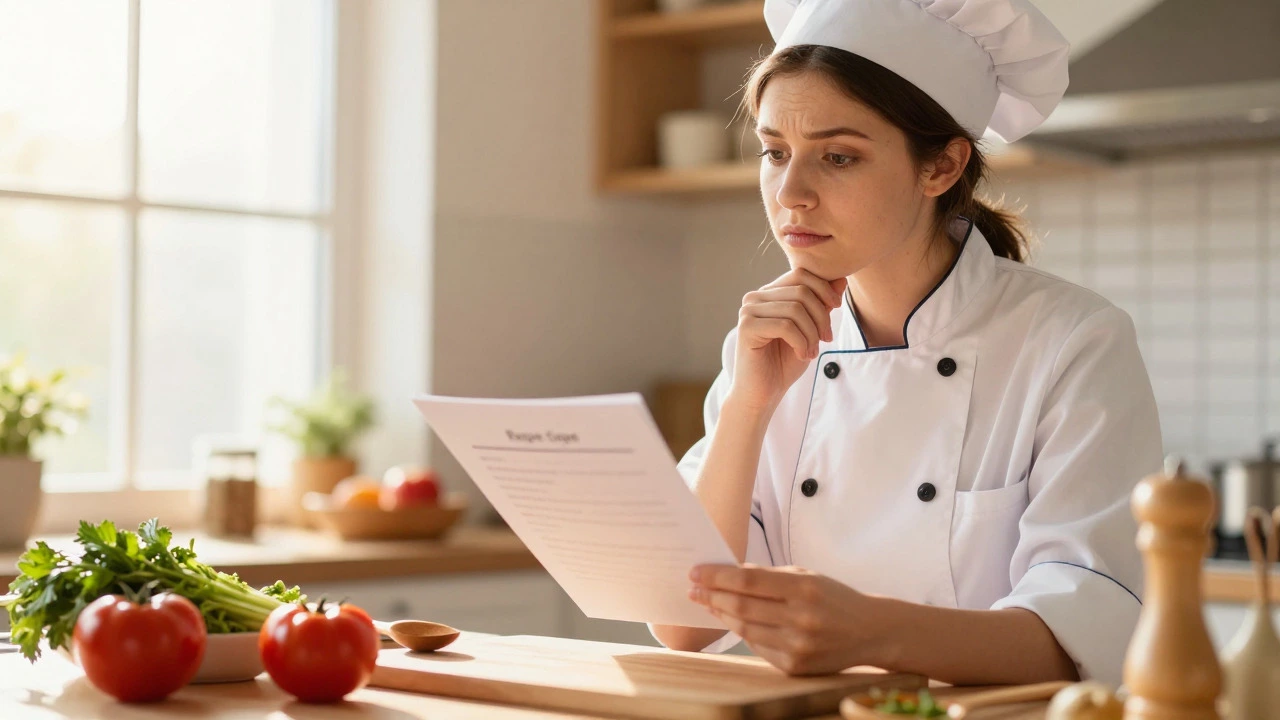
Ever stood in your kitchen, staring at a recipe that looks impossible, wondering if you just don't have the "gift"? You aren't alone. We hear stories of chefs who can taste a sauce and know exactly what's missing, or bakers who make perfect croissants without measuring cups. It’s easy to assume these people were born with magic hands while the rest of us are stuck burning toast.
But here is the hard truth: cooking is overwhelmingly a skill, not a talent. While some people might have a slightly sharper palate or better hand-eye coordination from birth, those traits matter far less than practice, patience, and understanding how food works. If you believe cooking is purely genetic, you’re giving yourself an excuse to stay mediocre. If you treat it as a learnable craft, you unlock the ability to feed yourself well for the rest of your life.
The Myth of the "Born Chef"
We love the idea of innate talent because it simplifies things. If someone is good at something, they must be special. If they are bad, they are broken. This binary thinking hurts home cooks more than anyone else. When you burn a steak, do you think, “I need to lower the heat next time,” or do you think, “I’m just bad at this”?
Let’s look at the data. A study published in the journal *Appetite* found that self-perceived cooking ability was strongly linked to frequency of cooking, not gender or age. In other words, the more you cook, the better you get. There is no secret gene for sautéing onions. There is only repetition. Every professional chef you admire started by cutting themselves, over-salting soup, and ordering takeout after a failed dinner party. They didn’t start knowing; they started doing.
Why It Feels Like Talent (And Why That’s Wrong)
If cooking is a skill, why does it feel like some people are just naturally gifted? Usually, it comes down to two factors: exposure and feedback loops.
Early Exposure: Many people we call "talented" grew up in kitchens. They watched their parents or grandparents cook for thousands of hours before they ever held a knife. By the time they tried cooking themselves, they had absorbed the rhythms of the kitchen subconsciously. That isn’t magic; it’s early education. You can replicate this now by watching cooking videos or taking classes.
Better Feedback Loops: Good cooks taste as they go. They adjust salt, acid, and heat based on immediate results. Beginners often follow a recipe blindly and hope for the best. When the result is bland, they blame their lack of talent. But the issue wasn’t their hands; it was their process. Learning to taste critically is a learnable skill. It takes about three months of deliberate tasting to train your palate to identify basic flavor profiles.
| Trait | Perceived as "Talent" | Actually a "Skill" |
|---|---|---|
| Tasting | Having a "magic tongue" | Learning to identify sweet, salty, sour, bitter, umami |
| Knife Work | Natural dexterity | Practicing grip, angle, and rhythm (muscle memory) |
| Timing | Intuitive sense | Understanding heat transfer and protein denaturation |
| Plating | Artistic genius | Studying color theory and negative space |
The Science Behind Getting Better
Your brain is wired to improve at tasks through a process called neuroplasticity. When you chop vegetables repeatedly, the neural pathways associated with that motion strengthen. Eventually, you stop thinking about where to place your fingers and focus on the recipe instead. This is called automation.
Cooking also involves chemistry. Understanding that acid brightens flavors, fat carries aroma, and heat breaks down fibers turns cooking from a guessing game into a predictable system. Once you know *why* a cake rises (leavening agents creating gas bubbles), you can fix a flat cake next time. You don’t need a degree in food science, but you do need curiosity.
Consider the concept of “deliberate practice.” Popularized by psychologist Anders Ericsson, this theory suggests that expertise comes from focused effort on specific weaknesses, not just mindless repetition. If you want to get better at making pasta, don’t just make pasta every night. Focus on one variable: maybe it’s rolling the dough thinner, or salting the water correctly. Isolate the problem, solve it, then move to the next.
How to Build Your Cooking Skills Fast
You don’t need years to become a competent cook. With the right approach, you can see dramatic improvements in weeks. Here is how to accelerate your progress:
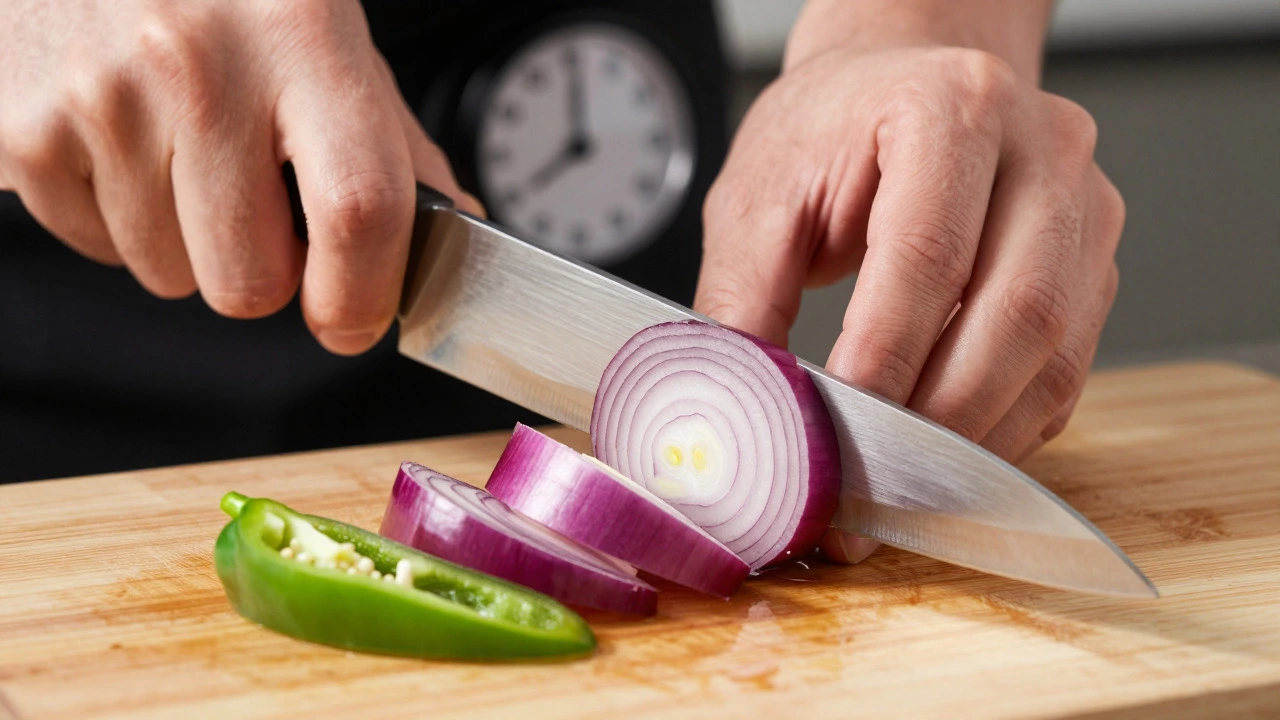
- Master the Basics First: Don’t try to make soufflés on day one. Learn to sauté an onion until it’s translucent. Learn to roast chicken so the skin is crispy and the meat is juicy. These foundational techniques apply to hundreds of recipes.
- Use a Timer: Overcooking is the #1 mistake beginners make. Set timers for everything. Even if you think five minutes is enough, set it. This builds an internal clock over time.
- Mise en Place: This French term means “everything in its place.” Chop all your ingredients before you turn on the stove. Rushing leads to mistakes. Organizing leads to calm.
- Taste Everything: Taste your food raw, halfway through, and at the end. Adjust seasoning gradually. Salt enhances flavor; acid (lemon juice, vinegar) balances richness.
- Clean As You Go: A messy kitchen creates stress. Stress leads to errors. Wash your knife while the onions caramelize. Keep your workspace clear.
When Classes Beat YouTube
YouTube is free, but it lacks accountability. You can watch a hundred videos on how to sear a steak and still fail because no one corrects your grip or tells you your pan isn’t hot enough. This is where cooking classes shine.
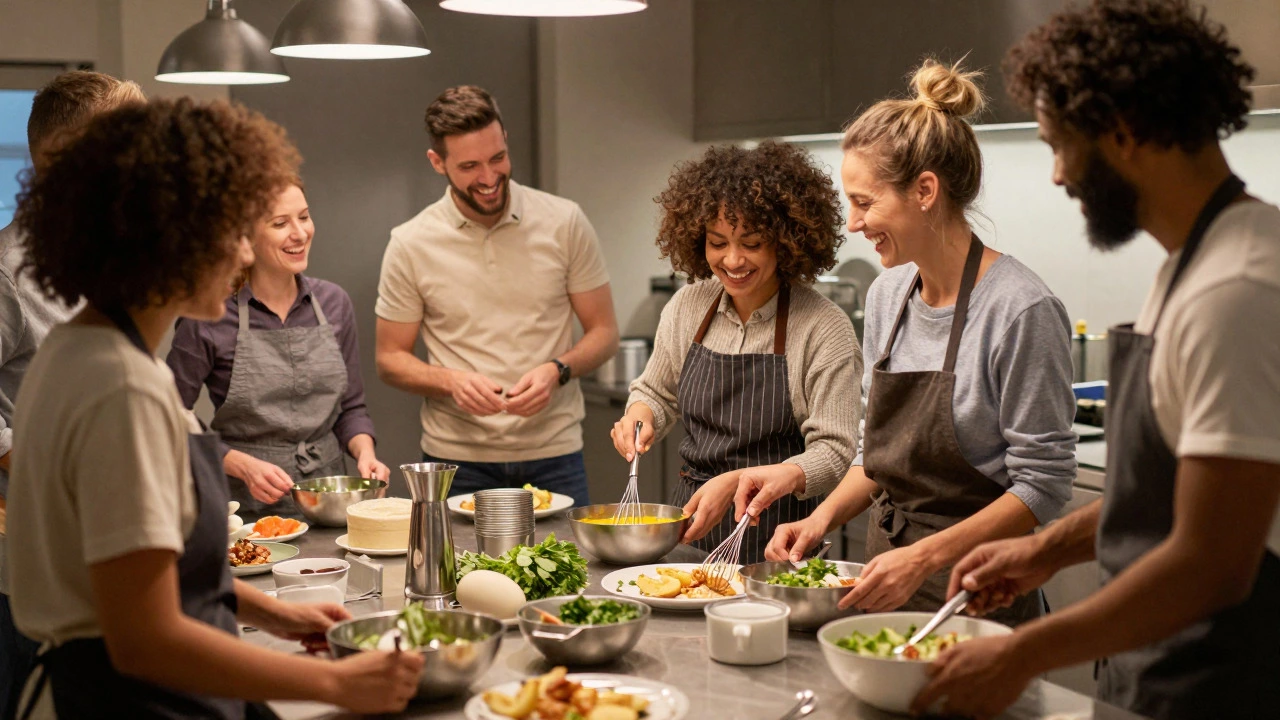
In a class setting, you get immediate feedback. An instructor watches you chop and says, “Your knuckles are too low; raise them to guide the blade.” That single correction saves you years of bad habits. Classes also provide a safe environment to fail. Burn the garlic? No big deal. The teacher shows you how to salvage it or start over. At home, failure feels expensive. In class, it’s part of the lesson.
Furthermore, classes build community. Cooking can be isolating. Sharing a meal with classmates reduces anxiety and makes learning fun. Studies show that social learning environments increase retention rates by up to 40%. You remember what you did when you laughed with friends over a burnt pizza crust.
Overcoming the Fear of Failure
The biggest barrier to becoming a skilled cook isn’t ability; it’s fear. Fear of wasting money, fear of disappointing guests, fear of looking stupid. This fear paralyzes you. It keeps you ordering takeout instead of trying that new recipe.
Reframe failure. In the kitchen, there is no failure, only data. If your sauce breaks, you learn that emulsions need slow whisking. If your bread is dense, you learn that yeast needs warmth. Each mistake teaches you a rule. Collect these rules, and you become a master.
Start small. Cook for yourself. Cook for one friend. Gradually increase the stakes. Confidence comes from competence, and competence comes from repetition. You don’t need to be perfect. You just need to be consistent.
Tools That Help You Learn
You don’t need a $5,000 kitchen. But having the right tools removes friction. Friction kills motivation. If your knife is dull, chopping is hard. If your pan sticks, searing is frustrating. Invest in a few high-quality basics:
- A Sharp Chef’s Knife: This is your most important tool. A sharp knife is safer and easier to use than a dull one.
- A Cast Iron Skillet: It retains heat beautifully and lasts forever. Great for steaks, eggs, and cornbread.
- A Digital Scale: Baking is chemistry. Volume measurements (cups) are inaccurate. Weight (grams) is precise. Use a scale for baking, and you will never fail again.
- An Instant-Read Thermometer: Stop guessing if meat is done. Take the temperature. 165°F for chicken, 130°F for medium-rare beef. Simple.
Conclusion: You Are Capable
Cooking is not a lottery ticket you win at birth. It is a language you learn. Some people pick up vocabulary faster, but anyone can become fluent with enough reading and speaking. The difference between a novice and a pro is not DNA; it is dedication.
So, the next time you stand in your kitchen feeling unsure, remember this: you are not lacking talent. You are just early in your journey. Pick up a knife. Turn on the stove. Make a mistake. Learn from it. Do it again. Before you know it, you’ll be the person others call “talented.” And you’ll know the truth: you just worked hard.
Can anyone learn to cook well?
Yes. Research shows that cooking ability correlates strongly with practice frequency, not innate genetics. With consistent effort and proper technique, almost anyone can become a proficient cook.
How long does it take to become a good home cook?
Most people see significant improvement within 3 to 6 months of regular cooking (2-3 times per week). Mastery of advanced techniques may take years, but daily competence is achievable quickly.
Do I need expensive equipment to cook well?
No. You need a sharp knife, a reliable pan, and a thermometer. Expensive gadgets are nice but unnecessary for building core skills. Focus on technique first, gear second.
Are cooking classes worth the money?
For many, yes. Classes provide immediate feedback, correct bad habits early, and offer social support. They accelerate learning compared to self-study, especially for beginners who lack confidence.
What is the hardest part of learning to cook?
The hardest part is overcoming the fear of failure and developing consistency. Technical skills like chopping are easy to learn; the mental shift from following recipes to understanding flavors takes time and patience.