What Makes a Good VR Experience: The 5 Pillars of Immersion
 Jul, 19 2026
VR Experience Quality Evaluator
Rate your VR experience across the five critical pillars to determine its overall quality and potential for causing discomfort.
Does it maintain 90+ FPS? Is latency under 20ms?
Are there options like teleportation or vignetting? Does it cause nausea?
Do objects feel weighty? Is tactile feedback distinct (e.g., rough vs smooth)?
Can you pinpoint sound direction? Does audio react to occlusion/distance?
Do actions have consequences? Is the world consistent? Do you forget the headset?
Quality Score
Average Experience
The experience is functional but lacks the polish needed for deep immersion. Some friction may be detected.
Why Most VR Experiences Fail to Hold Your Attention
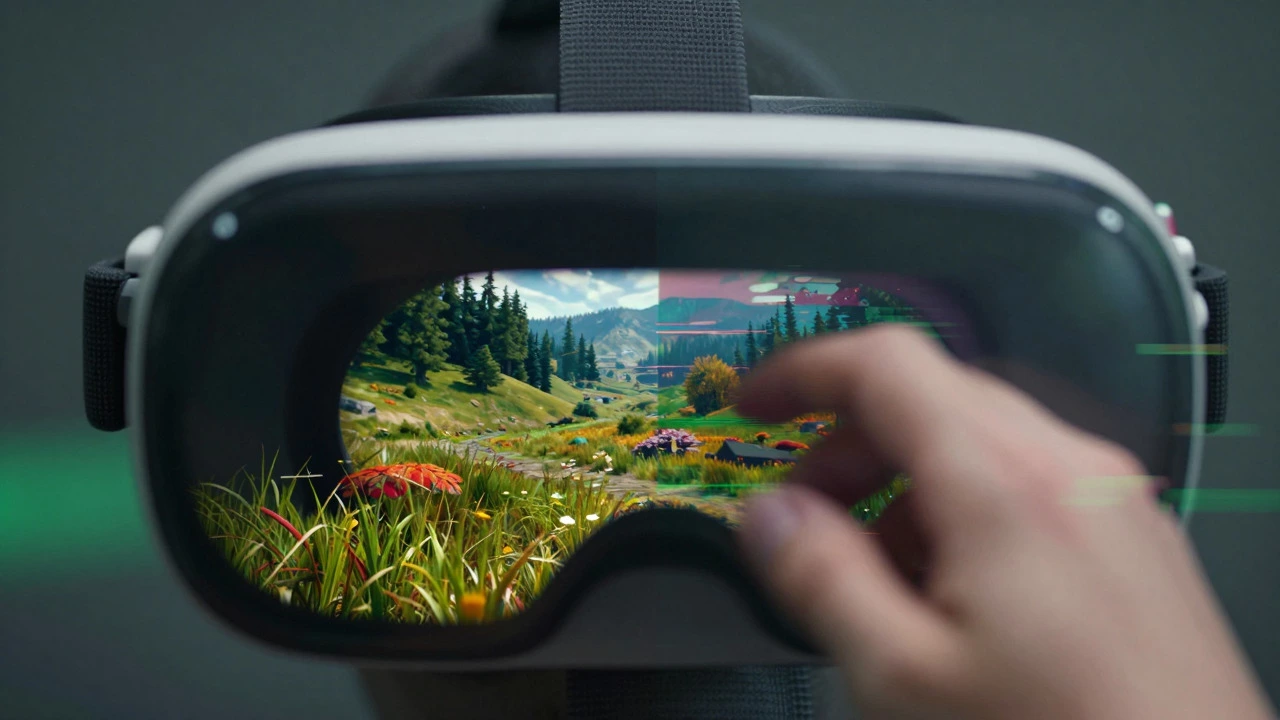
You put on the headset. The world around you vanishes, replaced by a digital landscape. For three seconds, it’s magic. Then, your stomach drops. Or worse, you just feel bored. You take the headset off, wipe the fog from the lenses, and wonder why it didn’t click.
This happens more often than you’d think. With hardware like the Meta Quest 3 or Apple Vision Pro becoming powerful enough to render photorealistic graphics, we’ve hit a strange wall. The technology is ready, but many experiences still feel hollow. Why? Because a good VR experience isn’t just about high-resolution textures or ray tracing. It’s about psychology, physics, and comfort working in perfect sync.
If you’re designing for VR, or just trying to figure out what to buy next, understanding the gap between "technically impressive" and "actually good" is crucial. Let’s break down the five non-negotiable pillars that separate forgettable demos from unforgettable journeys.
The Invisible Anchor: Latency and Frame Rate
Before we talk about story or visuals, we have to talk about the brain’s tolerance for delay. In traditional gaming, a frame drop is annoying. In VR, it’s nauseating. This is because of something called motion-to-photon latency. Simply put, it’s the time between when you move your head and when the image on the screen updates to match that movement.
Your inner ear tells your brain you’ve turned left. Your eyes see the old image for a split second longer than they should. That disconnect triggers a primal alarm system: Something is wrong. Are we dizzy? Poisoned? The result is simulator sickness, or what most people call motion sickness.
- The Golden Rule: A good VR experience must maintain at least 72 frames per second (FPS), with 90 FPS being the standard for comfort. Newer headsets aim for 120 FPS.
- Latency Target: Keep end-to-end latency under 20 milliseconds. If it creeps above 30ms, users will start to feel uneasy.
Think of it like driving a car with a delayed steering wheel. If you turn the wheel and the car waits half a second before reacting, you’ll crash. In VR, that "crash" is vomiting. Developers who optimize their code to keep these numbers low are respecting the user’s biology. Those who don’t are asking for refunds.
Moving Without Sickness: Locomotion Design
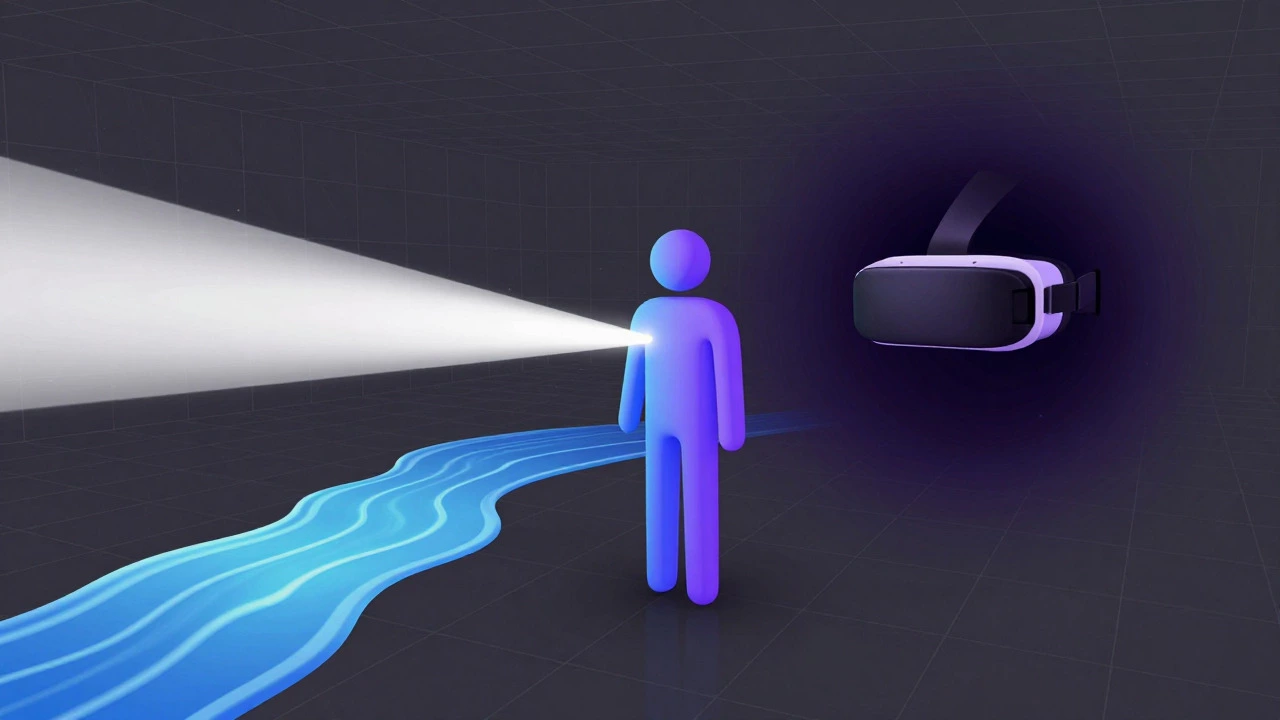
Once the headset stays stable, how do you get the user from Point A to Point B? This is where most experiences stumble. Walking forward in real life involves visual flow, vestibular input (inner ear balance), and proprioception (knowing where your limbs are). In VR, if you slide across a digital floor without moving your legs, your brain rebels.
A good VR experience offers multiple locomotion options, catering to different sensitivity levels.
| Method | Immersion Level | Motion Sickness Risk | Best Use Case |
|---|---|---|---|
| Room-Scale Walking | High | Very Low | Horror games, social spaces, training sims |
| Teleportation | Medium | Low | Exploration-heavy games, casual apps |
| Smooth Locomotion (Joystick) | High | High | Action shooters, racing games |
| Vignetting/Tunnel Vision | Medium | Medium | Reduces nausea during smooth movement |
The best designs use "vignetting"-darkening the edges of the screen during movement-to reduce peripheral vision cues that cause dizziness. They also allow users to customize their movement speed and acceleration curves. If an experience forces one type of movement on everyone, it’s failing half its audience.
Touching the Digital World: Haptics and Interaction
We don’t just watch the world; we touch it. When you pick up a cup in VR, it shouldn’t feel like poking through water. It needs weight, resistance, and texture. This is where haptic feedback comes into play.
Early VR controllers offered simple vibrations. Today, advanced systems use force feedback and adaptive triggers. But haptics aren’t just about the controllers. Consider full-body suits or even simple tactile gloves. When you grab a virtual rock, the controller should vibrate with a rough, gritty pattern. When you hold a bird, the vibration should be subtle and light.
Good interaction design also respects "affordances." A door handle should look like something you can pull. A button should look pressable. If the visual language doesn’t match the physical action, the illusion breaks. Think about Half-Life: Alyx. The way you physically reload a weapon, checking the magazine, pulling the bolt back-it feels satisfying because the digital object behaves like a real mechanical device. That tactile satisfaction is what keeps players engaged for hours.
The Sound of Space: Spatial Audio
Closed your eyes in a room right now. Can you tell where the sound of a fan or a computer fan is coming from? Probably. Your brain uses tiny differences in timing and volume between your two ears to locate sound sources. This is binaural hearing.
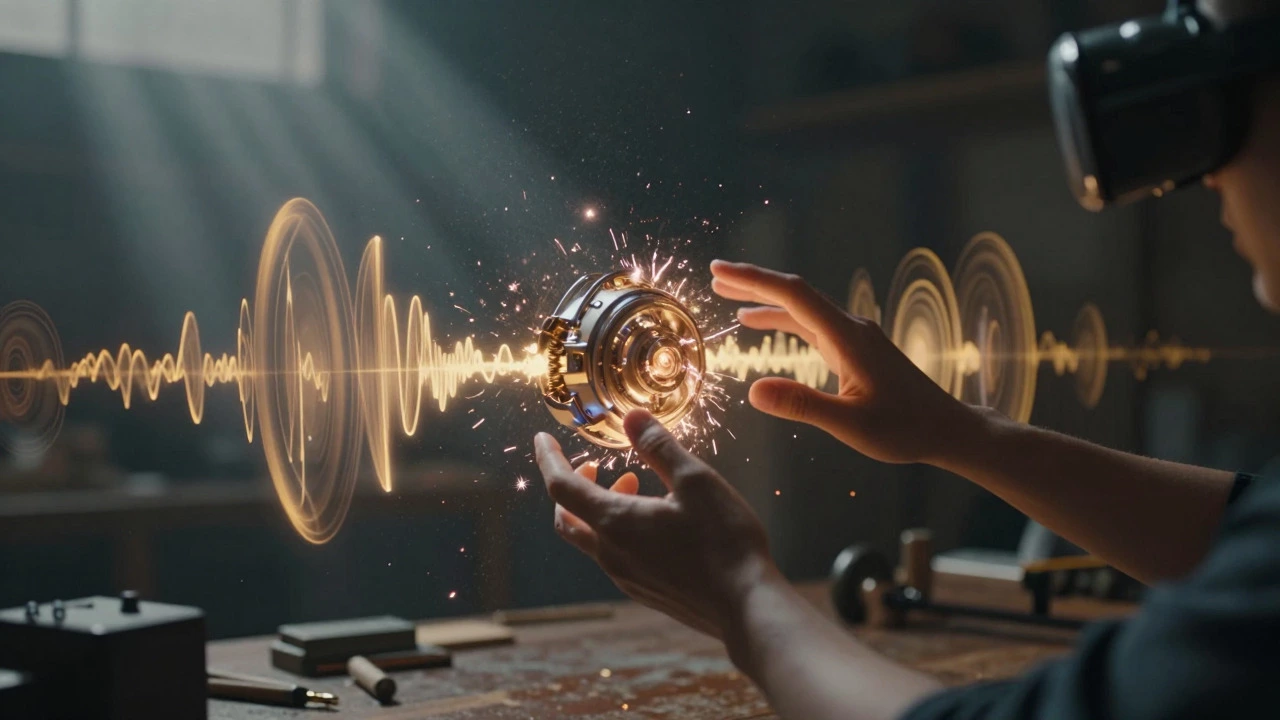
In VR, stereo audio (left/right) isn’t enough. You need spatial audio, which simulates how sound waves interact with your head, ears, and environment. If a zombie is behind you and to the left, you should hear it distinctly in that direction, not just as a general background noise.
Bad spatial audio makes a VR experience feel flat, like watching a 2D movie with headphones. Good spatial audio creates presence. It guides your attention without using UI arrows. If you hear footsteps creaking on wood above you, you’ll look up. That instinctive reaction is the hallmark of a well-designed soundscape. Engines like Wwise or FMOD are industry standards for creating these dynamic audio environments, allowing sounds to change based on distance, occlusion (walls blocking sound), and material reflection.
Presence Over Graphics: The Psychological Hook
Here’s the controversial truth: Photorealism is overrated if it lacks soul. A blocky, stylized game can be more immersive than a hyper-realistic one if it understands "presence." Presence is the feeling that you are actually there, not just looking at a screen.
How do you build presence?
- Agency: The user’s actions must have consequences. If I push a box, it moves. If I shoot a window, it shatters. The world must react to me.
- Consistency: The rules of the world must remain constant. Gravity should work the same way every time. Objects shouldn’t clip through walls randomly.
- Emotional Connection: Whether it’s the fear in a horror game or the wonder in an educational tour, the experience must evoke emotion. Beat Saber works because it taps into rhythm and flow state. Half-Life: Alyx works because it builds tension and narrative stakes.
Consider the difference between a static 360-degree video and an interactive VR experience. The video is passive; you’re a tourist. The interactive experience makes you a participant. Good VR designers remove unnecessary UI elements. No health bars floating in front of your face. Instead, maybe your hands shake when you’re hurt, or your vision blurs. Diegetic interfaces (interfaces that exist within the game world) preserve immersion better than non-diegetic ones (HUDs).
Comfort Breaks and Accessibility
Even the best VR experience can become exhausting. Heat buildup, eye strain, and physical fatigue are real issues. A good VR app acknowledges this.
It should offer:
- Quick Pause Menus: Easy access to rest mode or blur-out features.
- Seated vs. Standing Options: Not everyone has space to walk around.
- IPD Adjustment: Inter-Pupillary Distance settings ensure the lenses align with the user’s eyes, reducing eye strain.
Accessibility is no longer an afterthought. Subtitles for the hard of hearing, colorblind modes, and adjustable interaction distances make VR inclusive. If your experience excludes users with limited mobility or sensory differences, you’re missing out on a huge portion of the market.
Conclusion: The Sum of Its Parts
So, what makes a good VR experience? It’s not one flashy feature. It’s the seamless integration of low latency, comfortable locomotion, tactile feedback, spatial audio, and psychological presence. It’s the absence of friction. When you forget you’re wearing a headset, you’ve arrived.
As we move further into 2026, with mixed reality blending the physical and digital worlds, these principles only become more important. The line between reality and simulation is blurring, and the experiences that respect human physiology and psychology will win our time, our money, and our hearts.
What causes motion sickness in VR?
Motion sickness in VR is primarily caused by a mismatch between what your eyes see and what your inner ear feels. If you’re moving forward in the virtual world but standing still in the real world, your brain gets confused. High latency (delay between head movement and screen update) also exacerbates this issue. To prevent it, developers use techniques like teleportation, vignetting, and maintaining high frame rates (90+ FPS).
Is photorealism necessary for a good VR experience?
No, photorealism is not strictly necessary. While high-fidelity graphics can enhance immersion, stylized or low-poly art styles can be equally effective if they maintain consistency and strong gameplay mechanics. Games like Superhot VR or Beat Saber rely on clarity, rhythm, and agency rather than realistic textures to create compelling experiences.
How does spatial audio improve VR?
Spatial audio places sound sources in a 3D space, allowing users to pinpoint the direction and distance of noises. This enhances presence by guiding attention naturally (e.g., hearing a monster behind you) and making the environment feel alive. Unlike standard stereo audio, spatial audio accounts for how sound interacts with the user's head and the virtual environment's materials.
What is the best way to move in VR without getting sick?
The safest method for most users is teleportation, where you point to a location and instantly appear there. For those seeking higher immersion, smooth locomotion with a "vignette" (tunnel vision effect) can reduce nausea by limiting peripheral motion cues. Always choose an experience that allows you to customize movement speed and style.
Why is latency so critical in VR?
Latency refers to the delay between a user's action (like turning their head) and the visual response on the screen. High latency breaks the illusion of presence and can cause immediate discomfort or nausea. A latency of under 20 milliseconds is considered ideal to keep the user's brain convinced that the virtual world is real.
Can VR be used for education effectively?
Yes, VR is highly effective for education when it leverages presence and interactivity. Instead of passively reading about historical events or biological processes, students can explore them in 3D. For example, walking through a reconstructed ancient Rome or manipulating a 3D heart model provides experiential learning that boosts retention and engagement compared to traditional methods.